
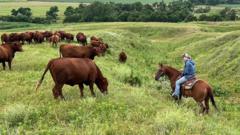
For Yvette Mannon, the trouble started with a spark. In April, a wildfire tore across her Nebraska ranch, turning 1,600 acres of prime grazing land and 13 miles of fence to ash. Her 300 cattle survived. But rebuilding was another story.
With steel prices driven sky-high by import tariffs, replacing the wire and posts cost $4.89 a foot. That is over $300,000 for fencing alone.
To keep her herd fed on the charred ground, Mannon had to run a tractor daily to haul hay. Meanwhile, diesel prices spiked more than 40% due to conflict in Iran. Then, the federal government decided to allow 300,000 metric tons of duty-free foreign beef into the country to lower consumer prices. The move hit just as American ranchers were preparing to sell their calves.
Mannon, a 63-year-old who voted for Donald Trump, felt betrayed. “So we’re ‘Buy American’, ‘Let’s Make America Great’,” she said. “But for you guys over here, sorry.”
A Political Shift in the Heartland
Nebraska has long been a deep-red stronghold, but the financial squeeze is forcing some ranchers to rethink their political allegiances. Rising overhead and market disruptions have created an unexpected opening for political outsiders. Dan Osborn, an independent Senate candidate, is polling surprisingly well against Trump-backed Republican Pete Ricketts.
GOP leaders are feeling the heat. To quiet the growing frustration, both Trump and Nebraska Governor Jim Pillen recently announced emergency relief programs aimed at lowering fuel costs for agricultural workers.
Farmers say the help is overdue. A combination of factors has created a perfect storm:
- Tariffs have inflated the cost of machinery, steel, and lumber.
- A spike in energy prices has made both fertilizer and diesel prohibitively expensive.
- Increased imports and decisions to open the southern border to Mexican cattle have flooded the market.
According to James Mitchell, an agricultural economist at the University of Arkansas, many cattle producers are now losing hundreds of dollars on every animal they sell. Cattle markets run in decade-long cycles, and Mitchell warns the industry is entering a clear downswing.
Frustration at the Feedlots
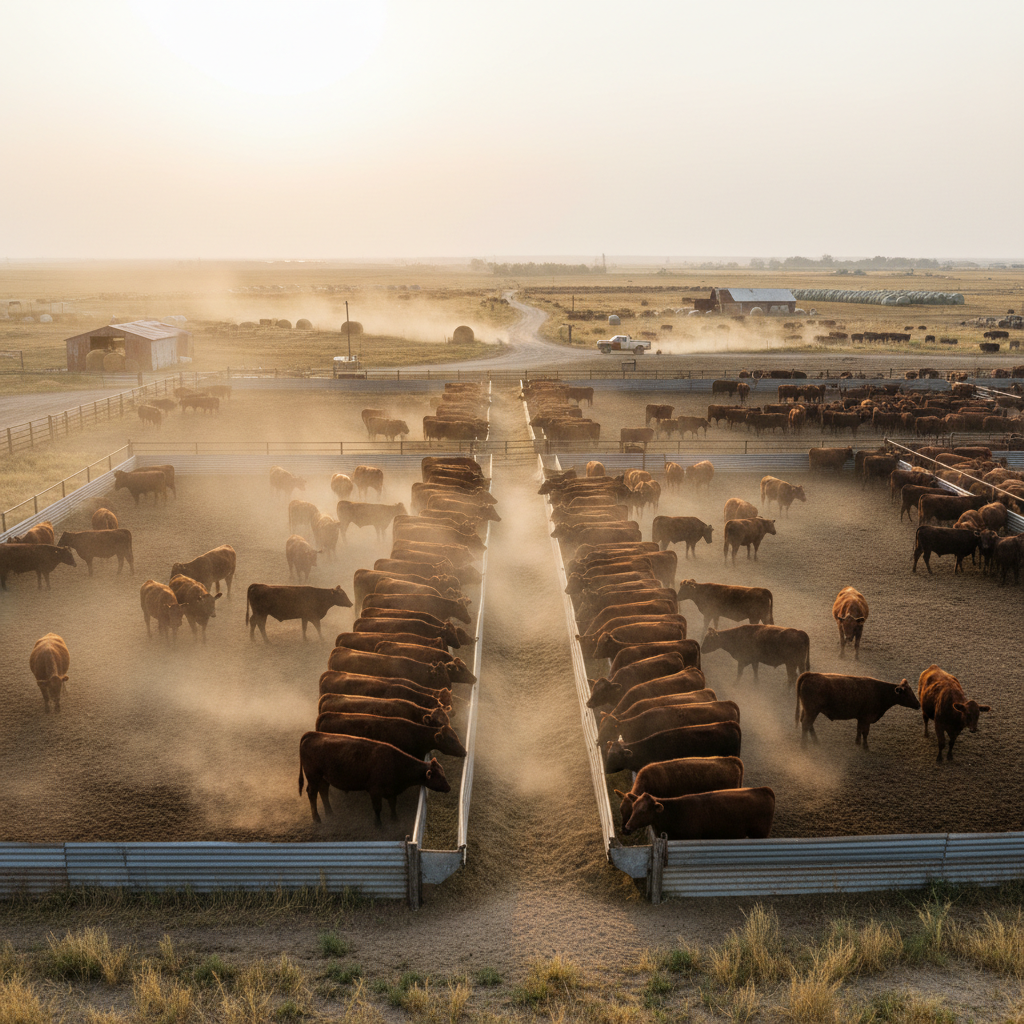
In Lexington, Nebraska, 45-year-old Jake Wolfinger is trying to protect his bottom line. He and his wife moved from Ohio in 2010, buying a run-down feedlot and transforming it into a modern operation with 5,500 cattle. Neighbors hold them up as proof that hard work still pays off in this brutal business.
But Wolfinger could not plan for global supply shocks. Prices for his cattle fell from $240 to $225 per hundredweight. While a $15 drop sounds small, it means losing hundreds of dollars per head. Meanwhile, his heavy machinery burns through 400 gallons of diesel a day.
Wolfinger voted for Trump to shake up Washington and push back against progressive social policies. Still, he hates federal meddling in the beef market. “People need to stay the hell out of farmers’ business,” he said.
The Loyalists Hold Firm
Not everyone is ready to break ranks. Near Callaway, 54-year-old Duane Kimball stands in a machine shed dominated by a massive Trump banner. He acknowledges that things are tough, noting that many local ranchers have had to go back to their banks to expand their lines of credit.
Yet Kimball refuses to blame the former president for his economic troubles. “To pin that on this administration, I don’t think is a fair assessment,” Kimball said. For him, the real enemy remains excessive federal regulation, not the trade policies of the man he hopes to see back in the White House.