
A Journey Back to the Canopy
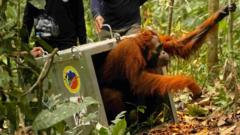
The steel doors of the transport cages slid open, and the humid air of the western Borneo rainforest rushed in. A mother orangutan emerged first. She looked around, her long red hair catching the morning light, before climbing effortlessly up a thick vine. Her young daughter followed closely, clinging tightly to her mother’s back. They were home.
On Friday, conservationists celebrated a major victory. They released eight critically endangered orangutans back into the wild. The group consisted of three mother-daughter pairs and two large adult males. All of them had survived a terrifying ordeal just months earlier.
Escaping the Flames
Their journey to this quiet reserve began in panic. During August and September, massive wildfires tore through the Indonesian rainforest. Dry conditions turned the peat-rich soil and dense trees into an absolute tinderbox. For slow-moving tree dwellers like orangutans, these fires are incredibly deadly. Smoke chokes them. Flames trap them in the high canopy with no way down.
The fires in Borneo are not always natural. Often, agricultural burning gets out of hand during the dry season. Peatlands, drained for farming, catch fire easily and can smolder underground for weeks. This produces a thick, toxic haze that blankets the region, affecting humans and wildlife alike.
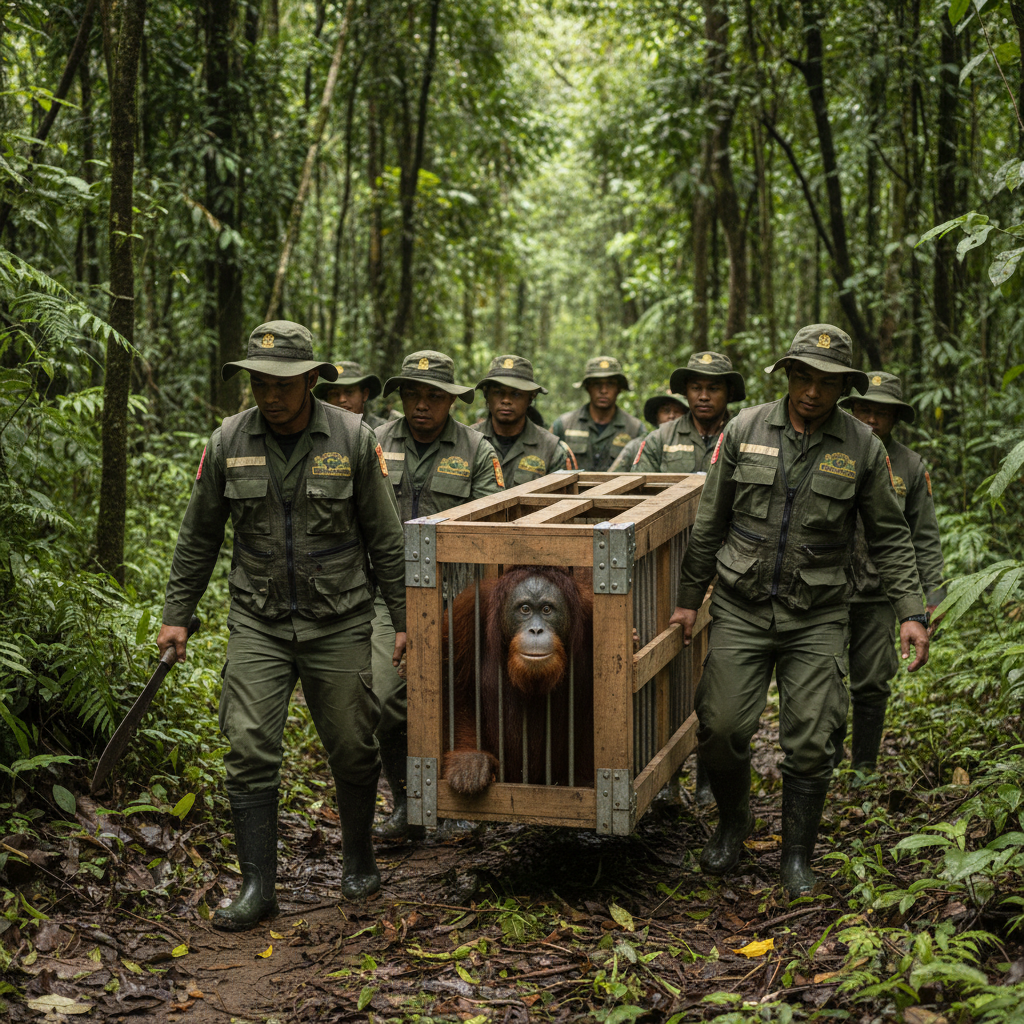
Indonesian wildlife authorities knew they had to act fast. Teams worked under grueling conditions, tracking down distressed animals in areas threatened by the advancing flames. In total, they managed to rescue 46 orangutans from the burning forests during those two devastating months.
The Road to Recovery
Saving them from the fire was only the first step. The rescued apes needed immediate medical attention. Vets treated them for smoke inhalation, dehydration, and cuts. Keeping the mother-daughter pairs together was a top priority for the team. Young orangutans stay with their mothers for up to eight years, learning how to find food, build nests, and navigate the canopy. Separating them would have ruined their chances of ever returning to the wild.
While eight apes returned to the wild on Friday, the work is far from over. The remaining rescued orangutans are still undergoing rehabilitation or health checks, with teams hoping to release more when they are deemed ready and when safe habitats are secured.
A Fragile Future
Bornean orangutans are critically endangered. Their numbers have plummeted over the last century due to logging, palm oil plantations, and infrastructure development. Wildfires make a bad situation worse. Every single animal returned to the forest represents a vital lifeline for the survival of the species.
Transporting eight large primates deep into a remote reserve is no easy task. It requires boats, off-road vehicles, and hours of foot travel through dense jungle. But as the last of the eight apes climbed out of sight into the green canopy, the exhaustion of the rescue teams melted away. The forest was whole again, if only by a fraction.