
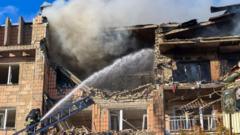
Donald Trump declared an immediate energy ceasefire between Russia and Ukraine on Sunday. Hours later, the bombs kept falling.
According to Ukrainian President Volodymyr Zelensky, Russian forces struck six energy facilities across the country shortly after the US president announced the deal. The attacks injured at least 33 people, knocked out electricity in several regions, and cast immediate doubt on Washington's ability to broker a swift truce.
Blackouts and Broken Grids
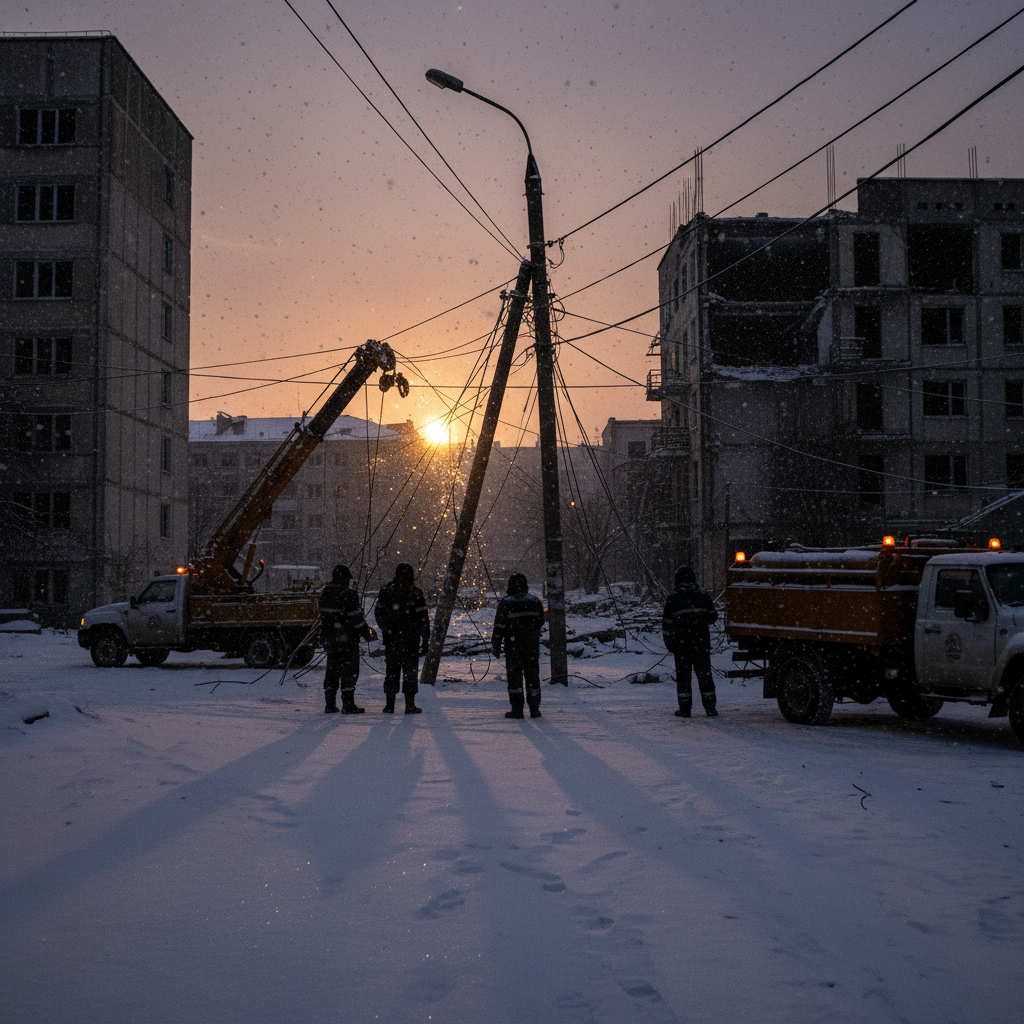
In the eastern city of Izyum, residents faced sudden blackouts after airstrikes tore through local power grids. Overnight, Russian missiles and drones also pounded energy and railway hubs in western Ukraine. On Monday, Ukraine's state-owned grid operator, Ukrenergo, announced fresh emergency electricity rationing in Kharkiv, Donetsk, and Zaporizhzhia to prevent the fragile, damaged system from collapsing entirely.
“We did not attack, while Russia attacked our gas stations, energy infrastructure, and other facilities,” Zelensky told Fox News. He added bluntly: “I think it was Putin’s answer to President Trump.”
When Trump first announced the ceasefire on Sunday, Zelensky admitted the news came as a surprise. Still, he said he supported the plan as a major step toward ending the war, provided the US actually steps in to make sure Moscow respects the agreement. Russia, however, seems to have other ideas. On Monday, Russian Foreign Minister Sergei Lavrov made Moscow's position clear, stating that Ukraine does not deserve the “respite” a ceasefire would offer.
The US Diesel Deal
Trump’s push for an energy truce is closely tied to domestic economic pressures. High fuel prices have been a major political headache in the US ahead of the upcoming midterm elections. On Friday, Trump revealed a plan to import Russian diesel to ease global market pressures, a move that requires temporarily lifting some US energy sanctions.
To make the deal work, Trump has urged Kyiv to stop targeting Russian refineries. Zelensky, however, criticized the sanctions relief, calling it a “gift” to Russian President Vladimir Putin.
For months, both nations have traded devastating blows on each other's energy systems. Ukraine has used drones to target oil depots deep inside Russia to choke off Moscow’s war funding. Russia has retaliated by systematically dismantling Ukraine's civilian power grid.
A War of Attrition
Data shows the conflict has only intensified as winter approaches. BBC Verify tracked 273 Ukrainian strikes on Russian-controlled oil and gas sites in 2026—more than double the 124 recorded during the same period in 2025. Meanwhile, data from the conflict monitor Acled shows that Russian attacks on Ukraine's energy network have increased by 2.4 times this year.
While international allies like the UK, France, and Canada quickly backed Trump’s call for a truce, officials in Europe remain highly skeptical. EU foreign policy chief Kaja Kallas said the bloc would welcome the deal “when it holds,” noting there is no sign yet that Moscow will cooperate. Estonia’s foreign minister was even more direct, stating flatly that the ceasefire is simply not working. For everyday Ukrainians facing a freezing winter with ruined power lines, the high-stakes diplomacy in Washington feels worlds away from the reality on the ground.