
For decades, India’s tech giants sold one main thing: human hours. If a global bank needed a database migration, an army of engineers in Bengaluru coded it, billing by the hour. But that engine is stalling. Generative artificial intelligence has arrived, and it writes code in seconds. Now, the outsourcing sector faces an existential puzzle: how do you charge for labor when the labor takes a fraction of the time?
The Death of the Billable Hour
The traditional Time and Material (T&M) model, which once accounted for the vast majority of Indian IT revenue, is under intense pressure. Major players like Tata Consultancy Services (TCS), Infosys, and Wipro are seeing legacy clients demand steep price cuts. If an AI tool can automate 40% of software testing or application maintenance, clients do not want to pay for those hours.
“The math just does not work for clients anymore,” says Ashutosh Sharma, a veteran technology analyst who tracks emerging market trends. “They know the tools are out there. If an IT vendor is still billing purely on headcount, they are begging to be replaced.”
This pressure comes at a delicate time. Global tech spending has slowed. Companies are tightening budgets, forcing India’s $250 billion IT export industry to rewrite its financial playbook. Headcount at several top-tier firms actually fell last year, even as revenues remained relatively stable. This is a historic decoupling. In the past, more revenue always meant more hiring.
Results Over Resources
To survive, firms are moving toward “outcome-based” and “value-based” pricing. Instead of billing for ten developers working for three months, companies are charging a flat fee for delivering a specific result.
Consider how this works in practice. If a retailer wants to migrate its legacy supply chain software to the cloud, the pricing is tied directly to the migration’s success and system performance, not the hours logged. If the IT firm uses generative AI to finish the job in half the time, they keep the extra margin. If they drag their feet, they lose money.
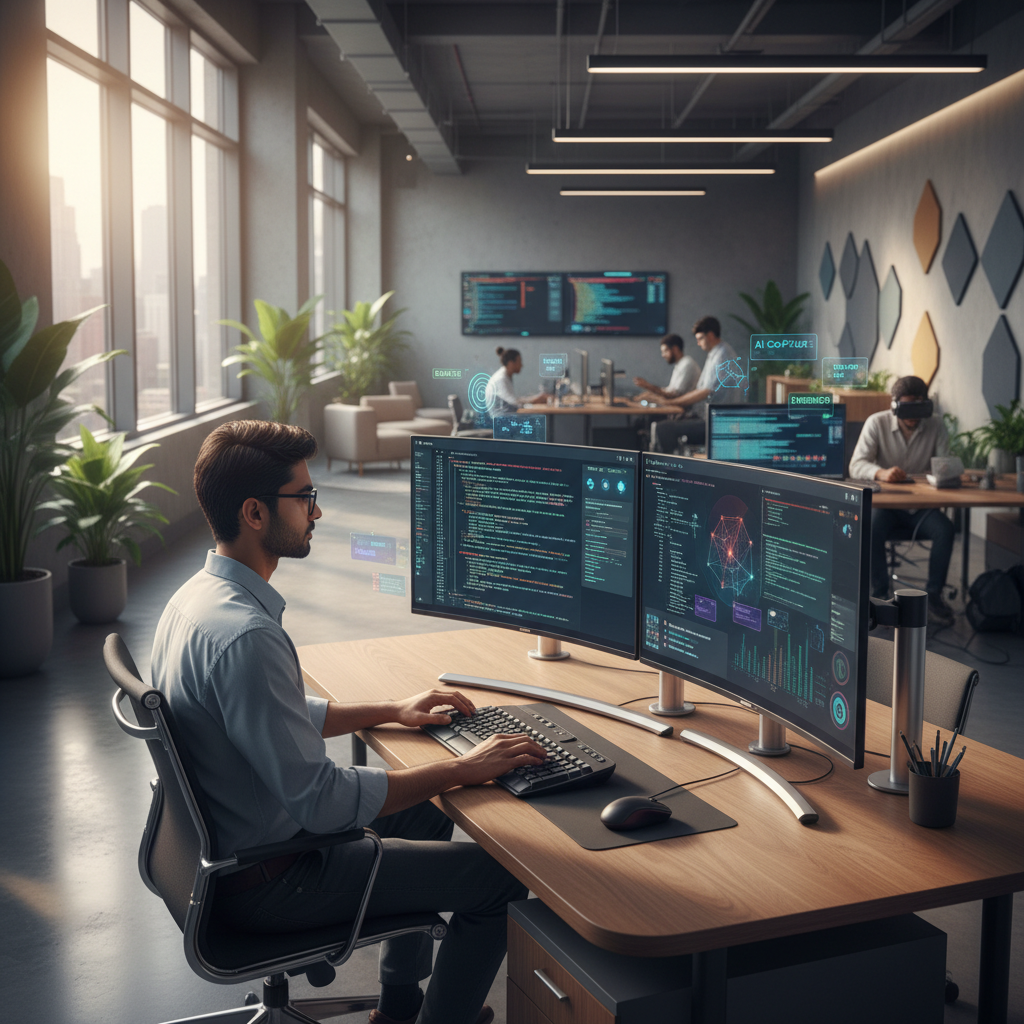
This shift completely flips the incentives. Historically, IT firms made more money when projects took longer. Now, speed is profitable. Business leaders are forced to focus on automation to keep their margins intact.
The Risk of the Pivot
But this transition is highly risky. Measuring “outcomes” is notoriously difficult. If a client’s e-commerce platform goes down, is it because of a coding error, a third-party API, or a cloud hosting failure? Agreeing on these metrics can delay contracts for months.
Moreover, clients want the savings upfront. Many legacy contracts are being renegotiated with “productivity clawbacks”—clauses that mandate automatic price drops year-over-year as AI efficiency improves. This puts pressure on operating margins, which have already shrunk across the sector. To counter this, firms are bundling proprietary AI platforms into their services:
- Infosys has launched Topaz, an AI-first suite of services.
- Wipro is investing heavily in its ai360 ecosystem.
- TCS is training over 350,000 employees in generative AI tools to offer specialized, high-margin consulting.
By selling these proprietary platforms alongside human talent, they hope to lock clients into long-term subscriptions, mimicking the lucrative software-as-a-service (SaaS) business model.
A New Breed of Engineer
The pricing shakeup is changing who these companies hire. For thirty years, Indian IT was a volume game. Fresh graduates were hired by the tens of thousands, trained on vast campus facilities, and deployed to billable projects as quickly as possible.
That era of mass campus recruitment is fading. Instead, firms are hunting for “full-stack” professionals who can direct AI agents, understand business strategy, and negotiate complex service-level agreements. The demand for entry-level coders is plummeting, while the demand for specialized architects is soaring.
The transition will be painful. Legacy contracts still make up the bulk of industry revenues, and unwinding them takes time. But the path forward is clear. The Indian IT sector is no longer just selling cheap hours. It is selling efficiency, and AI is the tool making it happen. Those who fail to adapt will watch their margins evaporate into the cloud.