
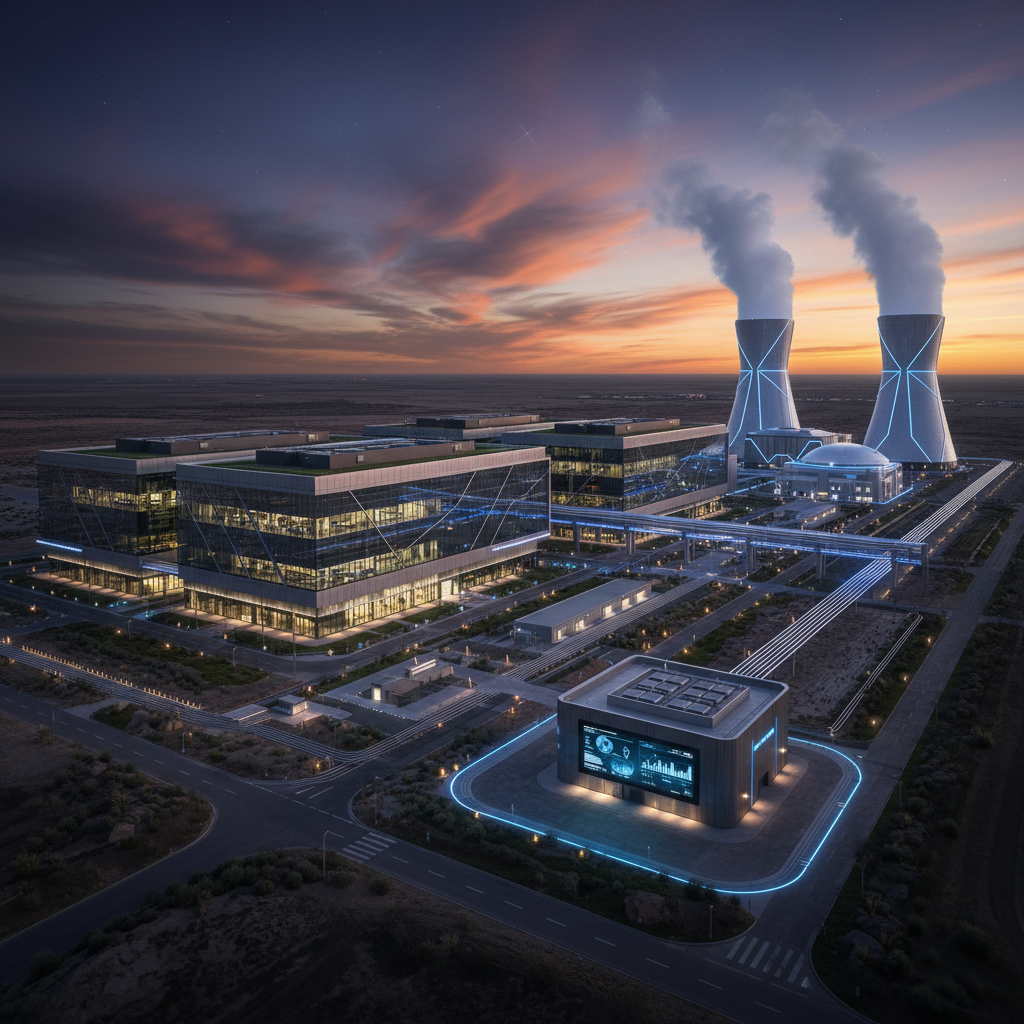
The Power Crisis Behind the AI Boom
Artificial intelligence has an insatiable appetite for electricity. It never sleeps. Every query sent to a generative AI model chips away at a dwindling supply of global grid capacity. As tech giants race to build massive new data centers, they are running into a hard wall: there simply is not enough power.
In Northern Virginia’s “Data Center Alley”—the undisputed heart of the global internet—and across major European hubs like Dublin and Frankfurt, local power grids are pushed to their limits. Utilities cannot lay cables or build substations fast enough to keep up. This bottleneck is forcing companies like Microsoft, Google, and Amazon to abandon their reliance on traditional wind and solar farms. Instead, they are looking toward more reliable, always-on alternatives: advanced geothermal energy and small modular nuclear reactors (SMRs).
Why Wind and Solar Aren’t Enough
For years, tech firms bought cheap renewable energy certificates from wind and solar developers to claim they were carbon neutral. But those sources depend on the weather. When the wind dies down or the sun sets, data centers still need to run. AI workloads require constant, uninterrupted baseload power around the clock.
The scale of this demand is staggering. A typical data center once required 10 to 50 megawatts of power. Today, new AI-focused facilities are requesting up to a gigawatt—enough to power a medium-sized city. Standard renewable setups simply cannot guarantee that kind of continuous output without massive battery storage systems that do not yet exist at scale.
Nuclear Goes Small
Nuclear power, once shunned by the tech sector due to high costs and political baggage, is making a stunning comeback. The industry is betting heavily on SMRs. These reactors are built in factories and shipped to site, promising lower costs and faster deployment than traditional, massive nuclear plants.
- Amazon Web Services recently acquired a 950-megawatt data center campus in Pennsylvania directly connected to the Susquehanna nuclear plant.
- Microsoft signed a major deal with Constellation Energy to help resurrect a shuttered reactor at the infamous Three Mile Island plant.
- Oracle’s co-founder Larry Ellison announced that his company is designing a data center campus that will be powered by three small modular reactors.
However, getting these reactors built is not going to be easy. In the United States, the Nuclear Regulatory Commission is notorious for its slow, cautious approval process. Critics argue that tech giants are overestimating how quickly these reactors can come online. Some analysts suggest we won’t see commercial SMRs powering data centers until the early 2030s.
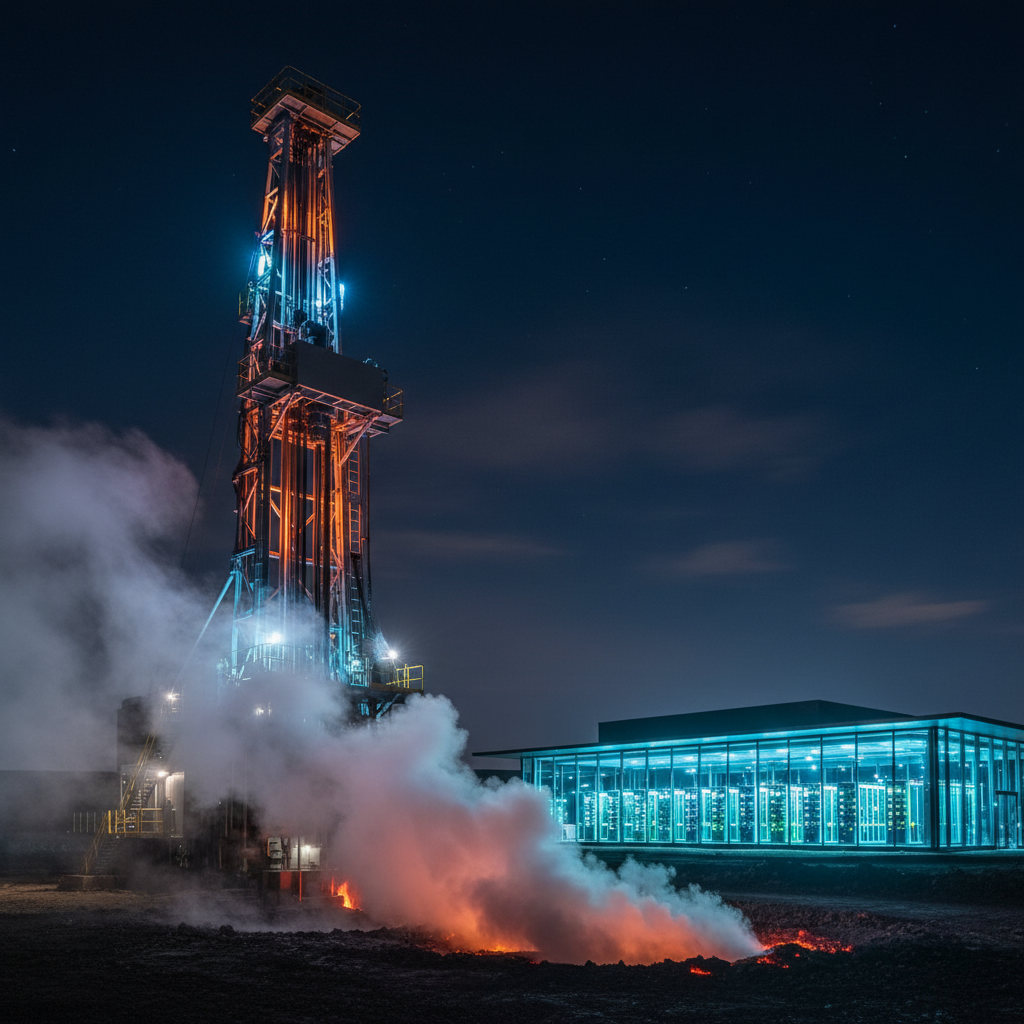
Tapping the Earth’s Deep Heat
While nuclear faces regulatory hurdles, geothermal energy is getting a high-tech upgrade. Traditional geothermal relies on rare, naturally occurring hot springs. Newer, enhanced geothermal systems (EGS) mimic fracking. They drill miles into the earth’s crust, inject water into hot rocks, and harvest the resulting steam to spin turbines.
Google has been a pioneer here. The company partnered with clean-energy startup Fervo Energy to power its Nevada data centers with an enhanced geothermal plant. This project now pumps clean, constant, carbon-free electricity directly into the local grid. Unlike solar panels, geothermal systems operate on a tiny physical footprint and run 24 hours a day, regardless of weather conditions.
Grid Bottlenecks from Virginia to Europe
This desperation for power is loudest in Northern Virginia. The region handles roughly 70% of the world’s daily internet traffic. Local utility Dominion Energy has warned that the sheer scale of new data center requests is straining the transmission grid to its breaking point.
In Europe, the situation is even more critical. Ireland’s state grid operator, EirGrid, has placed a de facto moratorium on new data center connections in the Dublin area. Meanwhile, in Germany, local authorities are forcing operators to reuse waste heat from facilities to justify their massive energy footprints.
The move toward SMRs and deep geothermal is not just about staying green. It is about survival in the AI arms race. The first company to secure reliable, gigawatt-scale power will dominate the next decade of computing.
“It is a land grab for electrons,” says Marcus Cooper, an independent energy analyst specializing in infrastructure. “The bottleneck is no longer the software or the chips. It is the plug in the wall.”