
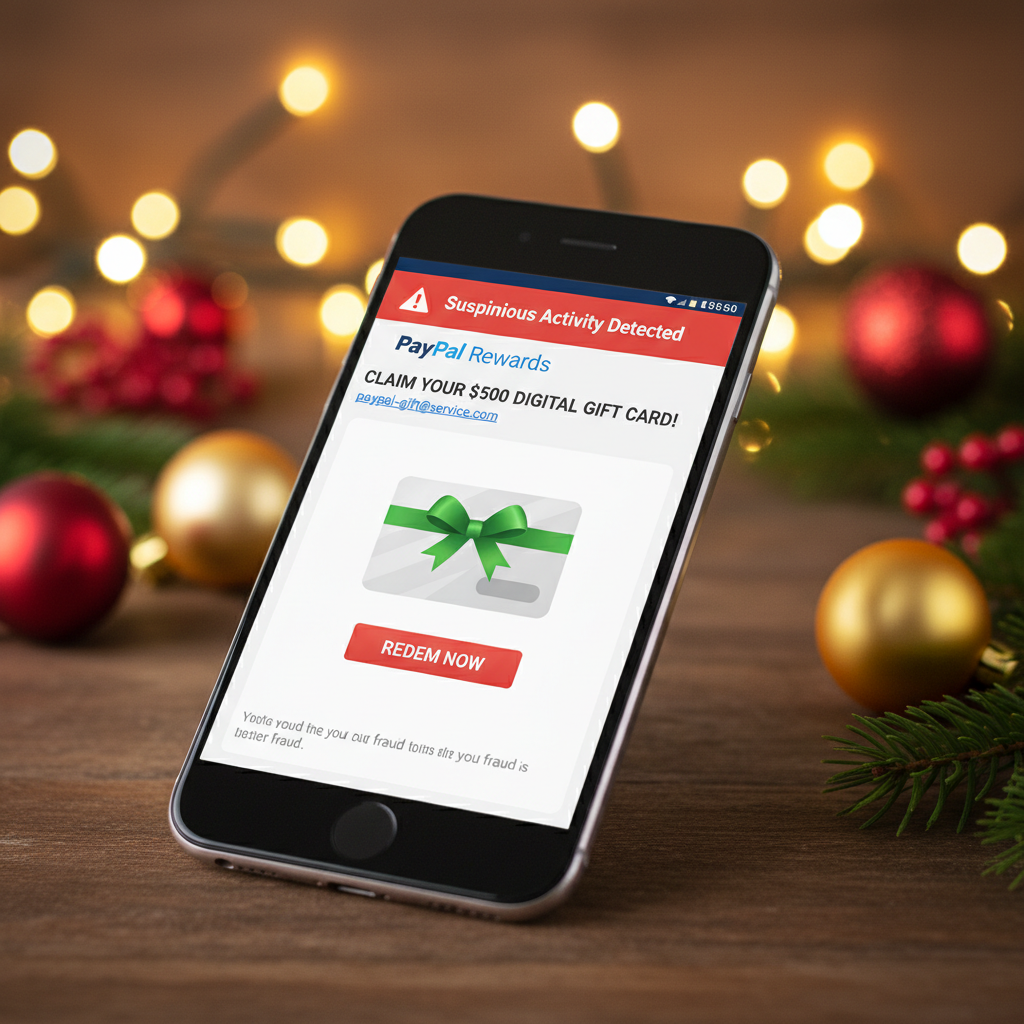
Cybersecurity researchers are warning shoppers to be on high alert this holiday season. A sophisticated new wave of AI-driven scams is targeting PayPal digital gift cards, and the threat is growing fast as the 2026 winter shopping rush begins.
According to a new report from Vanguard Cyber Security, threat actors are leveraging advanced artificial intelligence to automate and scale up their attacks. The firm has tracked a 58% spike in gift-card-related phishing attempts compared to the same period last year. What makes these campaigns so dangerous is how convincing they look.
The AI Evolution of Holiday Phishing
In the past, spotting a scam email was relatively easy. Bad grammar, awkward phrasing, and pixelated logos were dead giveaways. AI has changed all of that. Today, scammers use generative AI models to draft flawless, highly personalized emails that mimic official PayPal communications down to the last pixel.
“We are no longer looking at easily ignorable junk mail,” says Sarah Jenkins, head of threat intelligence at Vanguard. “These automated systems pull public data from social media and previous data breaches to craft messages tailored directly to you. They might thank you for a recent purchase you actually made, then offer a digital gift card as a loyalty reward.”
Once a victim clicks the link, they are taken to a highly realistic spoofed login page. If they enter their PayPal credentials, the scammers instantly hijack the account. In other cases, the link installs quiet malware designed to scrape digital gift card voucher codes stored in browser caches.

Why Digital Gift Cards?
Digital gift cards are practically cash. They are untraceable, instantly delivered, and incredibly easy for criminals to liquidate on secondary markets. PayPal digital gift cards are especially prized because of the brand’s massive global footprint and the speed with which transactions clear.
Once stolen, these cards do not sit around. Scammers quickly list them on peer-to-peer trading platforms at a discount, exchanging them for cryptocurrency. This rapid liquidation makes recovering the stolen funds virtually impossible for victims. By the time the buyer realizes their card is empty, the thief has already disappeared into the blockchain.
But phishing is only half the battle. Researchers have also uncovered AI-powered automated bots that target the backend of digital gift card systems. These bots use machine learning algorithms to predict and brute-force active gift card codes. Once a valid 16-digit code is cracked, the bot drains the balance in milliseconds, often before the legitimate recipient even opens the email containing their gift.
“It is a highly efficient conveyor belt of theft,” Jenkins explains. “The AI handles the scale. It scans millions of possible code combinations and executes transactions at a speed no human could ever match.”
How to Protect Your Holiday Budget
While the technology behind these scams is advanced, protecting yourself mostly relies on basic digital hygiene. Experts recommend several immediate steps to secure your holiday purchases.
- Verify the sender address: Scammers can mimic logos, but they cannot spoof the actual email domain perfectly. Look for slight misspellings or unusual domain extensions.
- Enable multi-factor authentication: Turn on two-factor authentication (2FA) on your PayPal account. Even if a scammer gets your password, they cannot log in without the temporary code sent to your phone.
- Buy directly from official portals: Avoid buying discounted digital gift cards from third-party social media marketplace sellers or unknown forums. Always use PayPal’s official digital gift store.
- Keep an eye on account activity: Set up instant notifications on your phone for all PayPal transactions so you can spot unauthorized purchases immediately.
Security firms expect these attacks to peak between Black Friday and Christmas Eve. PayPal has stated that it is actively monitoring these threats and updating its fraud detection systems to counter automated bots. However, because AI moves so fast, consumer vigilance remains the most effective line of defense. Before you click that holiday deal, take a second look. It might save you hundreds of dollars.