

It remains the most exasperating sight in international cricket. The crowd is packed, the match is hanging in the balance, and yet the players are walking off the field. Mid-afternoon gloom has stopped play once again.
The ongoing first Test between South Africa and Australia in Durban has revived this age-old frustration. Across the first three days at Kingsmead, bad light wiped out more than 60 overs. What makes this delay particularly grating is that a potential solution was officially added to the sport’s rulebook just last week. Yet, it sat completely unused.
The Durban Sun Sets Early
Durban is currently hosting its first-ever October Test. At this time of year on South Africa’s eastern coast, sunset comes early, shortly after 18:00 local time. To counter this, organizers scheduled play to begin daily at 09:30.
The weather, however, had other plans. While the mornings were hot and sunny, clouds rolled in rapidly during the afternoons. On day one, the umpires halted play at 15:23 with only 65.2 of the scheduled 90 overs completed. The players never returned. Days two and three saw marginally better finishes at 16:25 and 16:31 respectively, but still cost the match over an hour of play each day.
Meteorologists point to a classic coastal cycle. As the morning sun heats the inland areas, a cool sea breeze sweeps into Durban, raising humidity. As evening approaches and temperatures drop, this moist air becomes saturated, forming thick clouds that block out the sun.
A Rule Left on the Shelf
To tackle this recurring nightmare, the International Cricket Council (ICC) recently updated its playing conditions. Following a trial run earlier this year, teams can now agree to play a Test match entirely with a pink ball if they expect bad light to be an issue.
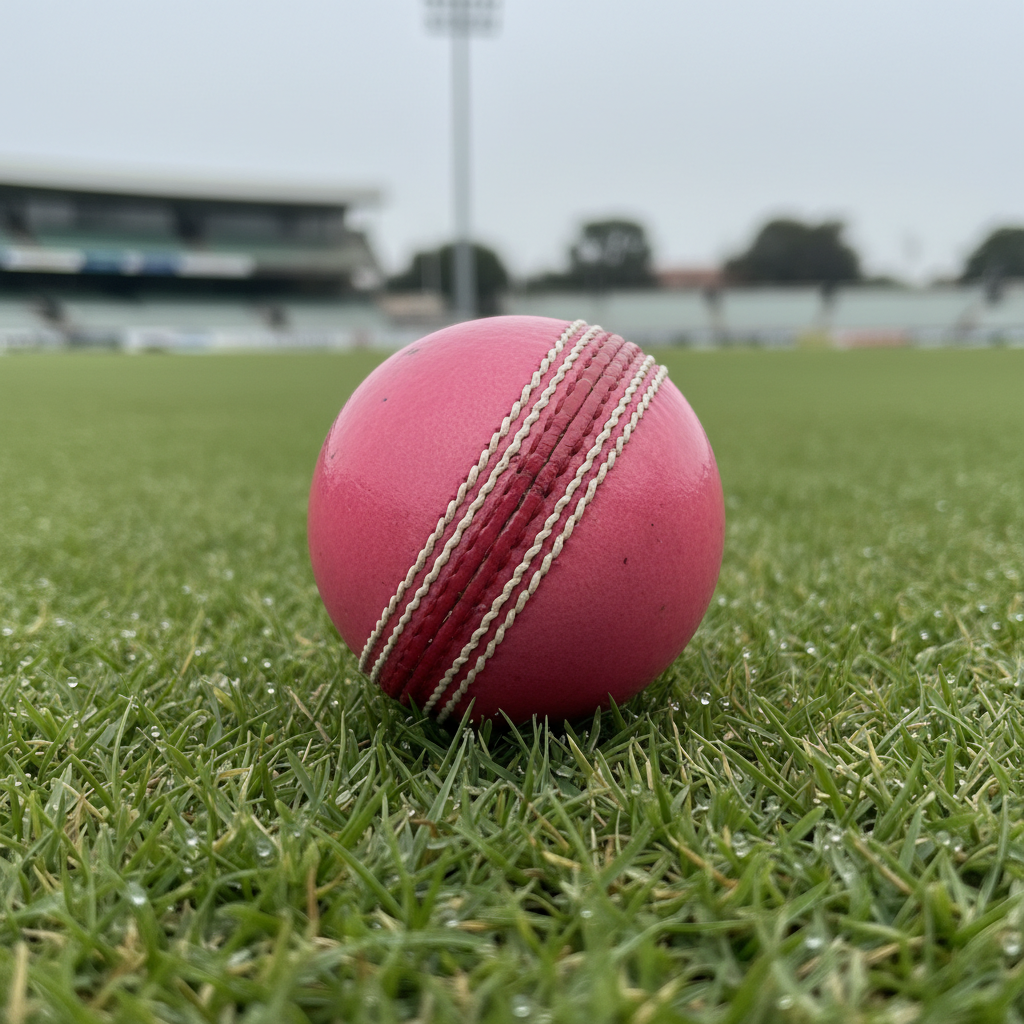
However, the rule does not allow umpires to swap a red ball for a pink one in the middle of a match when conditions deteriorate. That dynamic solution was previously championed by former England captain Michael Vaughan. Instead, the decision must be made and agreed upon by both teams before the coin toss. No such discussions took place between South Africa and Australia before this match.
Fear of the Pink Ball
Former South African fast bowler Shaun Pollock, who sits on the ICC committee that recommended the rule change, believes a deep-seated stigma is holding teams back from embracing the pink ball.
Pollock argues that teams are too quick to blame the pink ball for natural shifts in the game. “If Australia were 124-6 and we were using the pink ball, everyone would have said it was the pink ball’s fault,” Pollock noted. He pointed out that even when Australia recovered to score 390, critics would have complained that the pink ball had gone soft. “The pink ball would have meant we played 45 more overs of Test cricket,” Pollock added, urging the game to use it outside of day-night matches.
Part of the hesitation is tactical. The pink ball is notoriously difficult to sight during twilight, and batting averages drop significantly during evening sessions. More importantly, Australia is highly experienced with it. They have played 15 day-night Tests—ten more than any other nation. Their premier left-arm quick, Mitchell Starc, is the undisputed king of the format with 89 wickets. Facing Australia with a pink ball is a daunting prospect, and opposition teams are naturally reluctant to volunteer for it.
Should Umpires Force the Change?
Another former Proteas bowler, Vernon Philander, believes the current rule puts too much political pressure on the players. He favors a system where the ball can be switched mid-match, but insists the decision must be taken out of the teams’ hands entirely.
“They have to take it out of the hands of the players completely and enforce it from the umpires’ point of view,” Philander said. He acknowledged that switching balls mid-game will always spark arguments over who gains an unfair advantage. However, Philander believes empowering the match officials to make the call is the only way to protect the integrity of the game while keeping the players on the field.
For now, cricket remains stuck in its old ways, watching the clouds roll in while a shiny new rule gathers dust in the locker room.