
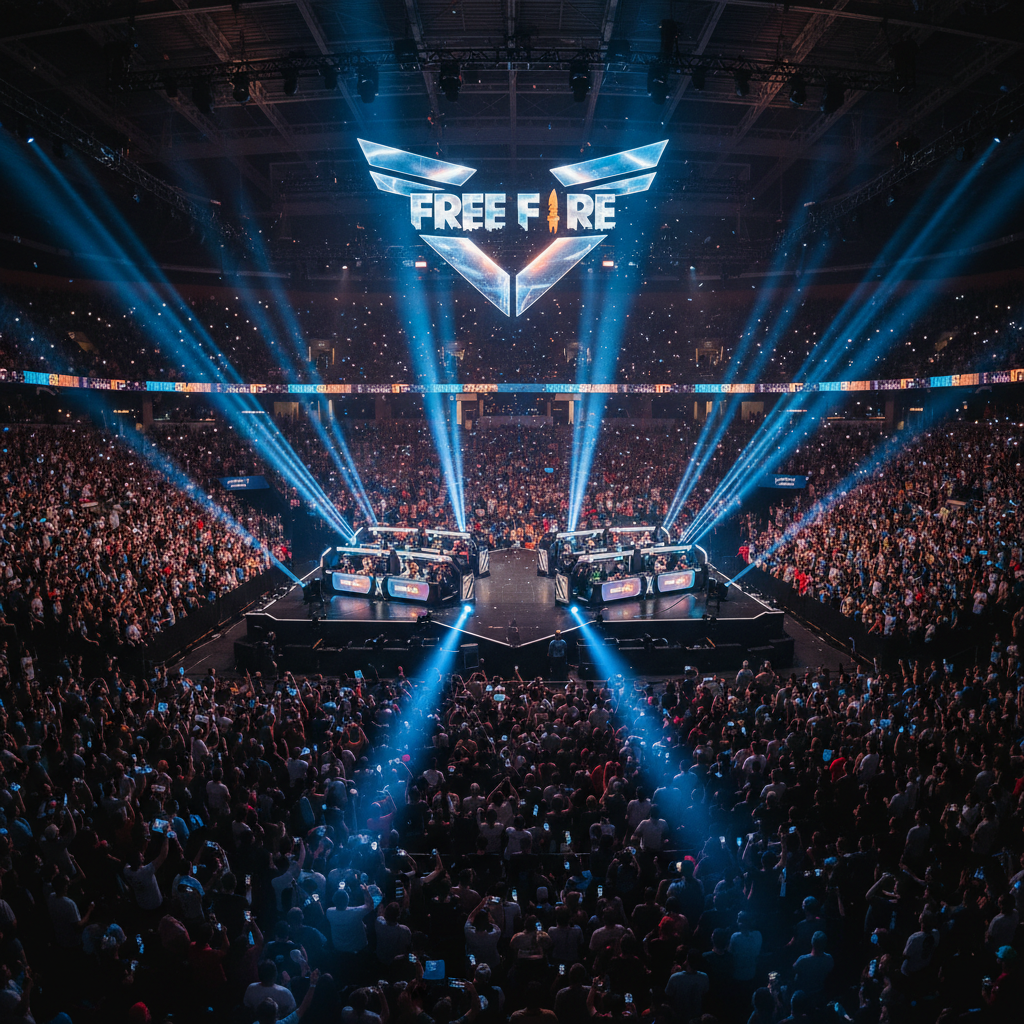
Rio De Janeiro Prepares for Free Fire’s Ultimate Showdown
The road to Rio just got a lot more complicated. Garena has officially pulled back the curtain on the team seedings for the upcoming Free Fire World Series (FFWS) 2026 Global Finals. But while teams were busy crunching the numbers on their group-stage opponents, Garena dropped an even bigger bomb. The developer is radically altering the game’s controversial ‘Resurrection’ mechanic right before the biggest tournament of the year.
For months, professional players and fans have debated the impact of player revivals on competitive integrity. Now, Garena is finally stepping in with a heavy hand. The changes aim to punish early mistakes and bring back the high-stakes tension that made Free Fire a global phenomenon in the first place.
Tackling the Resurrection Debate
Under the old rules, teams could easily bring back eliminated squad members using revival points or vending machines scattered across the map. This led to safe, passive playstyles where teams avoided early combat, knowing they could simply reset if things went south. Critics argued it ruined the spectator experience and rewarded sloppy play.
Garena’s new patch notes for the tournament build change everything. In Rio, the resurrection system will shut down completely once the fourth zone begins to shrink. Once you die late in the match, you are out for good. On top of that, the cost of revival cards at vending machines has skyrocketed from 400 to 600 FF coins. Teams can no longer hoard coins to buy back their entire squad in the final circles.
“This changes our entire drop strategy,” one prominent South American coach remarked under anonymity. “Before, you could afford to lose a man in a hot drop. Now, if you lose someone early, you’re playing at a massive disadvantage. It forces us to respect our lives a lot more.”

The Seedings: SEA Dominance vs. Home Turf Advantage
With 18 of the world’s best teams heading to Brazil, the seeding announcement has set the stage for intense group-stage rivalries. Southeast Asian (SEA) teams dominate the top tier, thanks to their incredible run over the past year. Regions like Thailand and Indonesia have consistently set the benchmark for aggressive play, earning them the majority of Pool A slots.
However, host nation Brazil isn’t going down without a fight. Local fans are expected to pack the arena in Rio, creating an intense environment for visiting teams. Brazilian squads have historically fed off this crowd energy, and the seedings guarantee some explosive regional matchups early in the tournament.
The Official Seed Pools
- Pool A: Top-seeded giants from Thailand, Indonesia, and the reigning champions from the Latin American League.
- Pool B: Strong contenders from Brazil, Vietnam, and the runner-up squads from the Middle East and Africa (MEA).
- Pool C: Wildcard entries, regional qualifiers, and emerging teams looking to pull off the ultimate underdog story.
The Battle for a Million-Dollar Prize Pool
The stakes in Rio are incredibly high. Beyond the prestige of being crowned the world’s best, teams are fighting for a slice of a massive $1 million prize pool. For many of these young players, a top-three finish can be entirely life-changing. This financial pressure, combined with the roaring Brazilian crowd, will test the mental fortitude of even the most experienced veterans.
Historically, Brazilian crowds are some of the loudest in esports. When a local team gets a squad wipe, the arena shakes. Foreign teams will need more than just mechanical skill to survive; they will need nerves of steel. With the new rules preventing easy revives, expect early-game skirmishes to be met with deafening cheers or absolute silence depending on who gets sent back to the lobby.
What to Expect in Rio
The tournament format remains as brutal as ever. The competition kicks off with the Knockout Stage, where the 18 teams will be split into three groups of six. Over several days of intense battle, they will fight for points to secure a spot in the crucial Point Rush stage. Point Rush gives top-performing teams a head start in the Grand Finals, where a single day of matches will decide who takes home the trophy.
By pairing these seeding groups with the new, harsher resurrection rules, Garena has guaranteed a chaotic and unpredictable tournament. Teams that rely on slow, methodical rotas might find themselves caught off guard by aggressive squads exploiting the new rules. One thing is certain: the team that lifts the trophy in Rio will have to earn every single elimination.