

The sky over Gaza rarely stays quiet for long. Recent military strikes have sent another wave of panic through the besieged enclave, forcing thousands of Palestinian families to flee their homes with little more than the clothes on their backs. It is a scene that has played out repeatedly, yet the terror remains fresh every single time.
According to reporting from Al Jazeera’s Nour Hegazy, the latest attacks have triggered chaotic evacuations. People are running. Parents clutch their children as they navigate streets filled with dust and debris. There is no real safe haven, but staying put is not an option. Many of those fleeing have already been displaced multiple times over the past months. They pack what they can carry into plastic bags, pile onto the backs of donkey carts, or simply walk until their feet give out.
The Constant Threat of Demolitions in East Jerusalem
While bombs fall on Gaza, a different kind of pressure is squeezing Palestinians in occupied East Jerusalem. Here, the threat does not come from the sky, but from municipal bulldozers. Home demolitions have ramped up, leaving families homeless in a matter of hours.
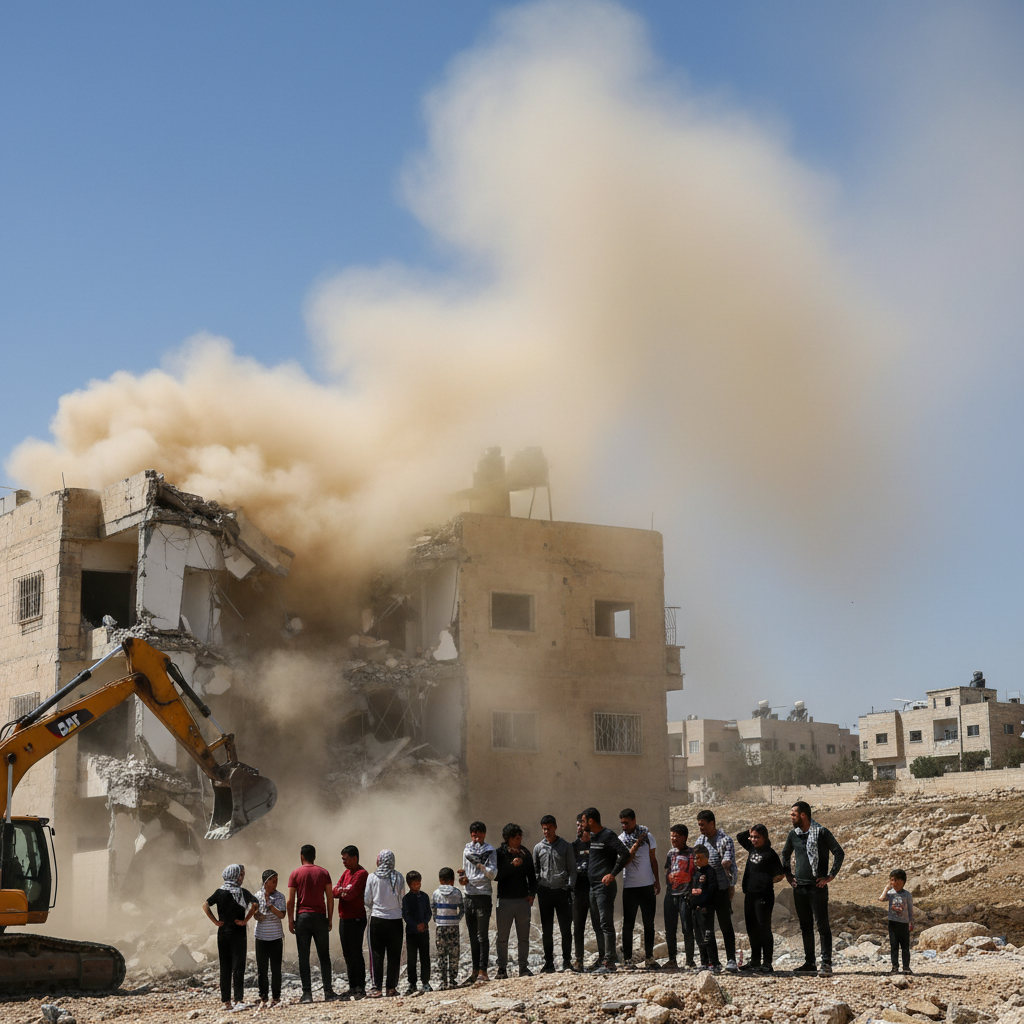
For decades, Palestinian residents have found it nearly impossible to obtain building permits from Israeli authorities. Facing natural family growth, many build anyway, risking everything. When the demolition orders are carried out, decades of savings and memories turn to rubble. Neighbors watch in silence as heavy machinery tears through concrete walls. It is a quiet, bureaucratic form of displacement that slowly chips away at the Palestinian presence in the city.
Settler Violence Surges Across the West Bank
Further inland, across the occupied West Bank, rural Palestinian communities are facing a severe escalation in settler violence. Armed groups of settlers have targeted small villages, destroying agricultural land and attacking residents. These actions are not isolated incidents; they have become a systematic threat to daily survival.
Olive groves, which represent both the cultural heritage and the primary livelihood for thousands of families, have been burned or cut down. During harvest seasons, farmers face physical assaults simply for trying to access their land. In several remote areas, the persistent harassment has succeeded in driving entire communities away. With little to no intervention from security forces to protect them, local residents say they feel entirely abandoned.
Whether through airstrikes, bulldozers, or intimidation, the pressure on Palestinian communities is intensifying on all fronts. The search for safety remains elusive, and for many, the future is defined by a single, desperate question: where is left to go?