For decades, the US dollar ruled global commerce without a serious challenger. That era is fading fast.
New data shows that the BRICS+ ‘Common Ledger’ payment platform handled a record 15% of all global trade settlements in the third quarter of 2026. This is a massive jump from just a year ago, signaling that the momentum behind de-dollarization is no longer just political rhetoric. It is now a hard economic reality.
A New Plumbing for Global Finance
The Common Ledger is a multilateral digital payment system designed specifically to bypass Western-dominated financial networks like SWIFT. By using a distributed ledger, member states can trade directly with one another using their own national currencies. They do not have to convert their money into US dollars first.
It is a simple shift with massive implications.
When the platform was first piloted, Western skeptics dismissed it as a clunky, politicized experiment. They argued that most countries would still prefer the liquidity and safety of the greenback. But the numbers from Q3 tell a very different story. The platform has scaled up rapidly, driven by major trade corridors between China, India, Russia, and the Middle East.
Why the Shift is Accelerating
The sudden rise of the Ledger is not an accident. It is the direct result of geopolitical decisions made over the last four years.
When the US and its allies froze Russian central bank assets and blocked major banks from SWIFT, it sent a shockwave through the developing world. Many capitals realized that relying solely on the dollar was a vulnerability. If Washington disagreed with your foreign policy, your economy could be shut down overnight.
“This isn’t just about politics anymore,” says Marcus Vance, a senior macroeconomist at global research firm Horizon Macro. “It’s about risk mitigation. Central banks and finance ministries across the Global South looked at the sanctions on Russia and decided they needed a backup plan. The Common Ledger provided exactly that.”
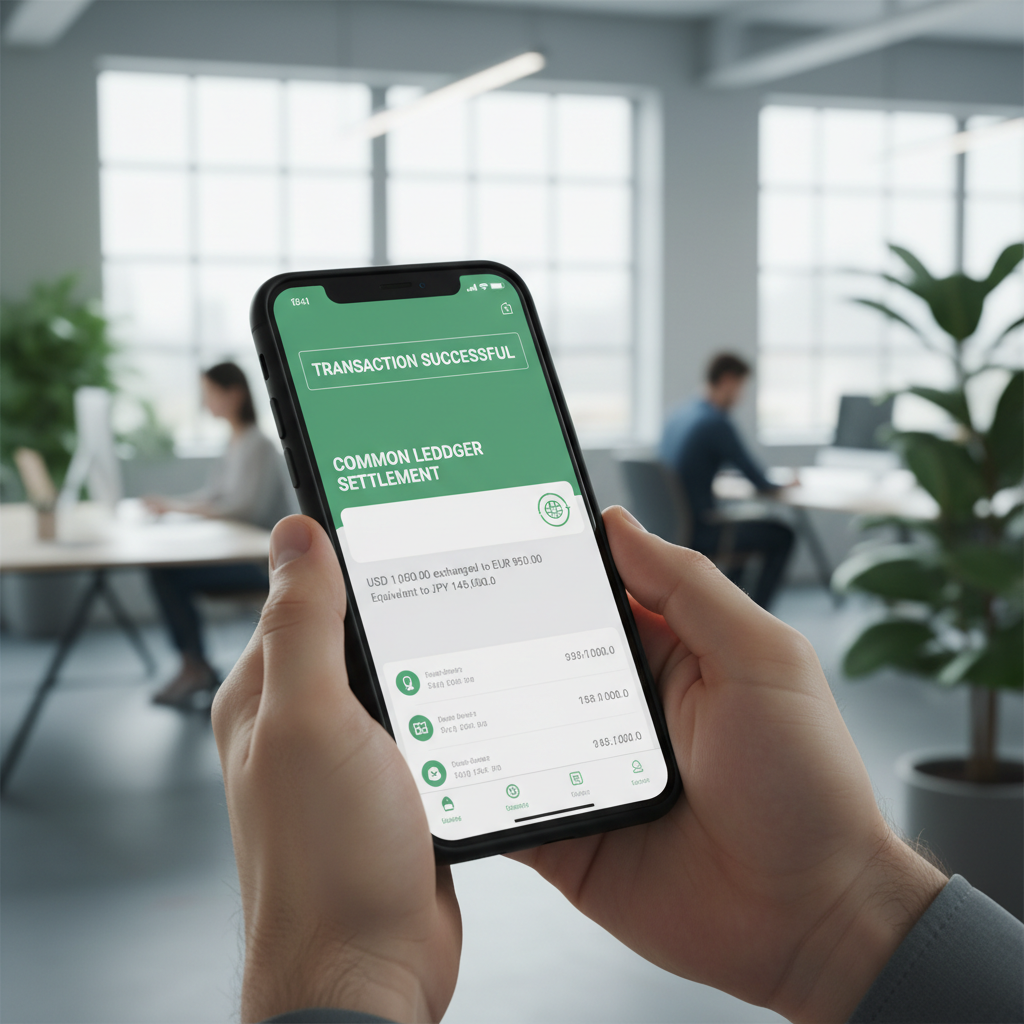
Cheap transactions have also helped. Settling trades directly in local currencies removes the cost of double-conversion fees. For high-volume commodities like oil, gas, and agricultural goods, those savings add up fast.
The Middle East Connection
Perhaps the most significant factor in the Q3 surge was the active participation of major oil producers. Since joining the expanded BRICS+ group, nations like Saudi Arabia and the United Arab Emirates have increasingly settled energy shipments using the Common Ledger.
Consider these developments:
- China and Saudi Arabia completed their largest-ever non-dollar oil transaction in September via the Ledger.
- India purchased millions of barrels of crude using local currency settlement mechanisms.
- Bilateral trade between Moscow and Beijing is now almost entirely non-dollarized.
This is a structural shift. Once these trade routes are established and the technology proves reliable, businesses rarely go back to the old, more expensive ways of doing things.
Washington Watches with Concern
The trend has not gone unnoticed in Washington. While the dollar remains the world’s primary reserve currency—still accounting for the majority of global reserves and transactions—its dominance is eroding at the margins.
Some US Treasury officials have warned that aggressive sanctions policies have backfired by accelerating the creation of parallel financial systems. Once a parallel system reaches a critical mass, US sanctions lose their teeth.
The 15% milestone is a psychological tipping point. It proves the ledger works at scale.
What Lies Ahead
As we head into the final quarter of 2026, the BRICS+ group is already looking to expand the platform’s features. Plans are underway to integrate retail digital currencies (CBDCs) and create a unified clearing house for sovereign bonds.
The global financial system is fracturing into two distinct blocs. On one side is the traditional, dollar-based Western system. On the other is a rising, decentralized network led by the Global South. For businesses operating globally, navigating this split is about to become the new normal.