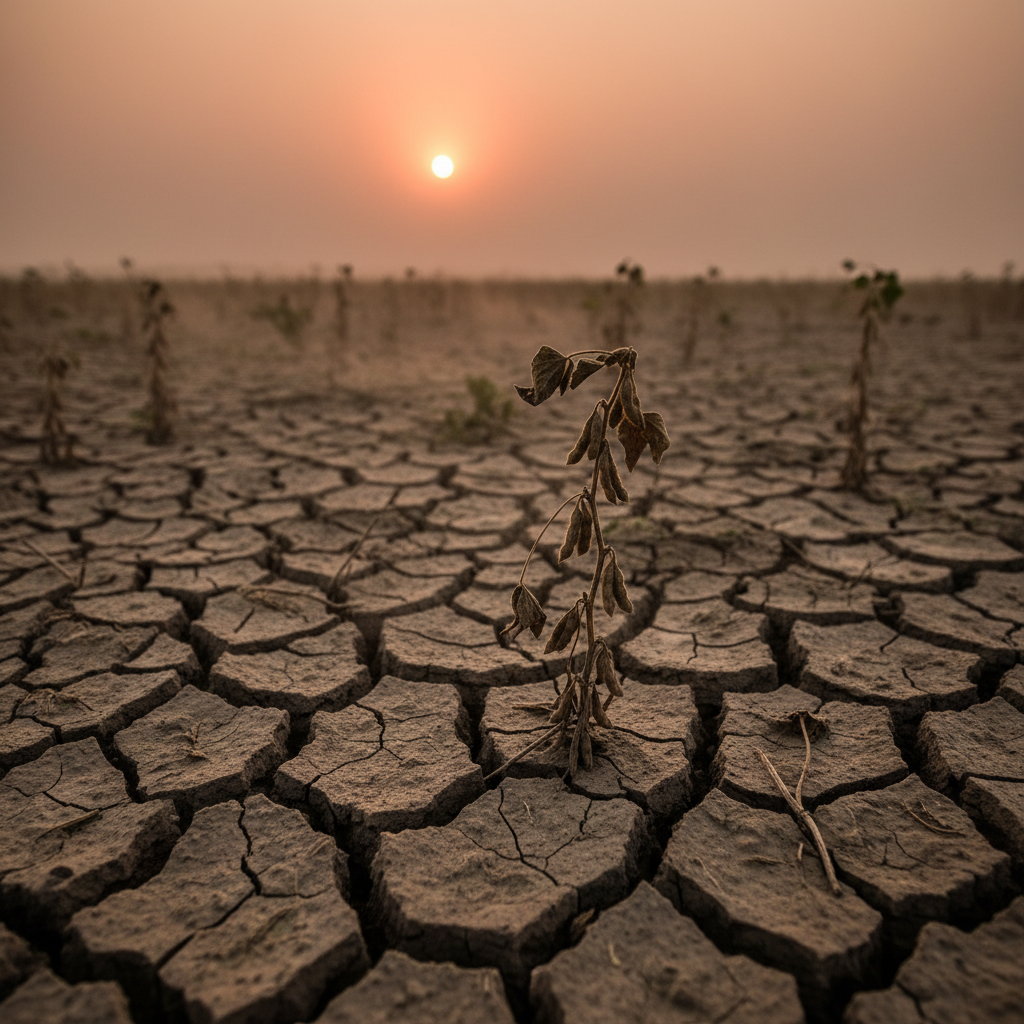
The Dust of Santa Fe
Lucas Martinez kicks a clod of dry earth in his field in Argentina’s Santa Fe province. It turns to dust instantly. "In a normal November, this should be green," he says, squinting under a harsh sun. Instead, the ground is cracked like a broken window. A historic drought is ravaging South America’s agricultural belt, triggering a massive grain shortage that is beginning to ripple through the global economy.
This is not just a local crisis. South America is the world’s indispensable food engine. Brazil and Argentina export huge amounts of the planet’s soy, corn, and wheat. With their fields parched, global grain reserves have plummeted to their lowest levels in twenty years. Chicago grain futures have gone wild. Corn prices have jumped 45% since late summer, and soybeans are close behind.
Why Your Grocery Bill is About to Jump
The average shopper might wonder why a dry spell in Argentina matters to them. The answer lies in the grocery store’s meat and dairy cases. Grain is the primary fuel for livestock. When feed prices spike, the cost of raising a chicken or a cow goes through the roof. Farmers either pass those costs on or reduce their herds. Both scenarios mean higher prices for meat, milk, and eggs.

This new wave of food inflation is hitting just as global economies thought they had inflation under control. Families are already exhausted by years of high prices. Now, they face another round of hikes on basic staples.
Logistics at a Standstill
To make matters worse, shipping is grinding to a halt. The Paraná River is a vital shipping highway used to transport Argentine grain to the ocean. Right now, it is so shallow that cargo ships are leaving port half-empty to avoid running aground. In Brazil’s Mato Grosso state, the situation is just as bad. Rainfall there was 60% below average this season, causing local cooperatives to slash their harvest estimates by 15 million metric tons.
Scrambling for Alternatives
Desperate buyers are scrambling for alternatives. Countries in North Africa and the Middle East, which rely heavily on imported grains, are knocking on other doors. They are looking to North America and Europe to fill the gap. But US crops had a mediocre year, and Black Sea shipping routes remain highly unstable.
Back in Santa Fe, Martinez looks up at the cloudless sky. There is no rain in the forecast for weeks. For him, the harvest is already a write-off. For everyone else, the financial pain is just starting to show up on the cash register.