It started with a quiet hope. For nearly three years, European property developers and their lenders played a tense game of “extend and pretend.” They rolled over short-term debts, adjusted loan terms, and waited, desperately, for central banks to slash interest rates back to the comfortable lows of the last decade. That rescue never arrived.
Now, in the autumn of 2026, the runway has finally ended. A massive wall of commercial real estate debt is maturing across Europe. With interest rates locked at their highest levels in fifteen years, a growing number of these loans cannot be refinanced. The result is a sharp peak in defaults that is putting the European banking sector under its most intense strain since the sovereign debt crisis.
No More Hiding the Losses
The numbers are hard to ignore. According to recent estimates from banking watchdogs, over €145 billion in commercial property loans are coming due in the final quarter of this year alone. Much of this debt was secured when property valuations were at their peak in 2020 and 2021.
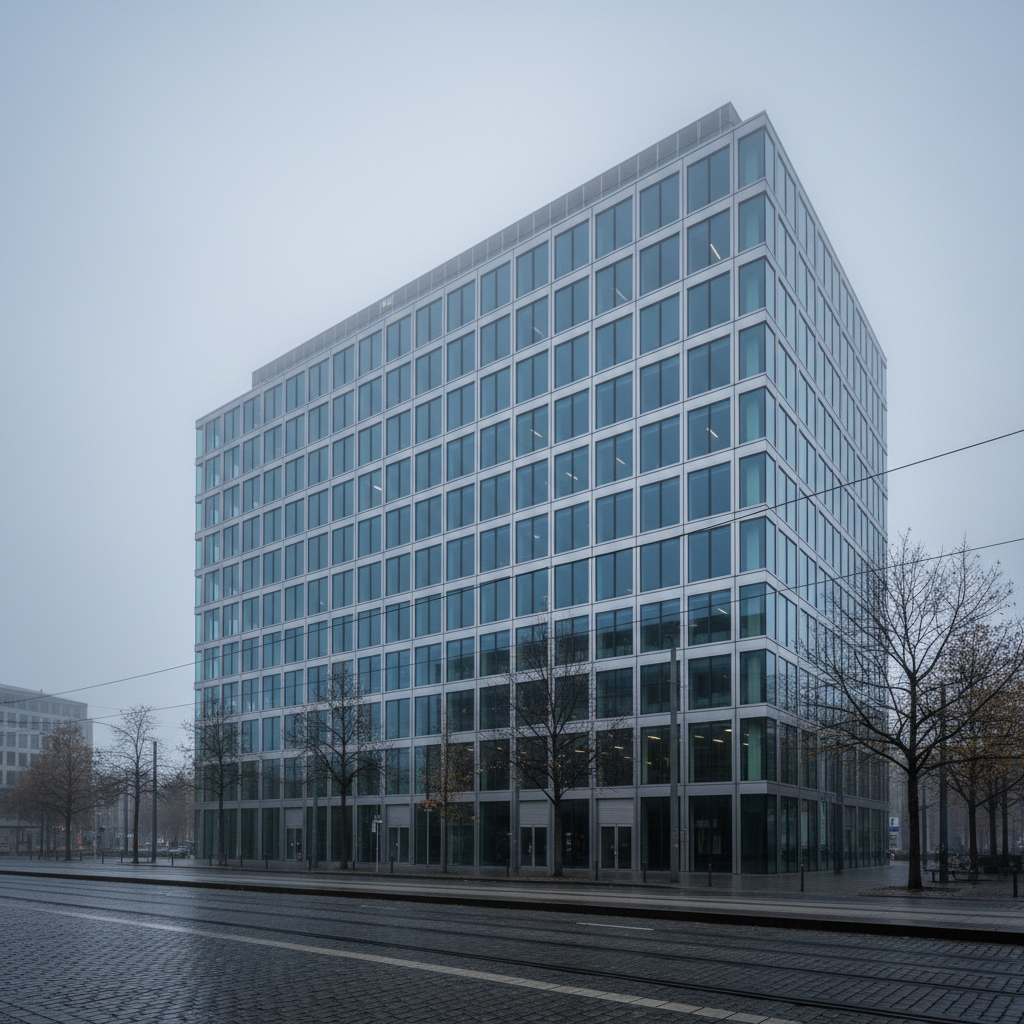
Today, those valuations have crumbled. Office towers in major business districts like Frankfurt’s banking quarter and London’s Canary Wharf have seen their paper values drop by 30% to 40%. When a building is worth less than the mortgage on it, refinancing becomes a math problem with no easy solution.
“Lenders are facing a brutal reality,” says Elena Rostova, a senior credit strategist based in Zurich. “You cannot refinance a loan when the collateral has evaporated. Banks are demanding that borrowers inject massive amounts of fresh cash to cover the shortfall. But developers simply do not have the money, and investors are refusing to throw good cash after bad.”
The Squeeze on Regional Lenders
While Europe’s largest systemic banks have spent years building up thick capital cushions, the pain is not distributed evenly. Mid-sized lenders and German regional Landesbanken are particularly exposed. These institutions have historically been the backbone of commercial real estate financing in Europe.

The European Central Bank recently signaled that non-performing loans in the commercial sector have hit their highest level in eight years. This has forced banks to set aside billions more in provisions for bad loans. It is a slow-motion drag on profitability that limits their ability to support other areas of the economy.
Some of the key pressure points include:
- German offices: High vacancy rates in secondary cities are compounding the impact of high borrowing costs.
- Nordic property markets: Heavily leveraged developers in Sweden and Norway are struggling to find buyers for legacy assets.
- Green conversion costs: Strict new European Union energy efficiency mandates mean aging buildings require expensive upgrades before they can be leased, adding another layer of cost to distressed properties.
Walking Away from the Keys
In many cases, developers are choosing the easiest way out: walking away. They are handing the keys back to their lenders. This leaves banks in the awkward position of managing half-empty, aging office buildings that they do not want and cannot easily sell.
The situation is further complicated by the stubbornness of inflation. The European Central Bank has kept its benchmark deposit rate steady, hinting that a return to cheap money is completely off the table for the foreseeable future. Borrowing costs are the new normal, and the real estate market must adapt to them.
What Lies Ahead
The current wave of defaults is unlikely to trigger a wider financial panic. The systemic safeguards put in place after 2008 are working. However, the economic fallout is real. As banks tie up capital to cover bad property loans, they are pulling back on credit for small businesses and households.
This quiet squeeze on credit could slow down Europe’s economic recovery just as it was starting to find its footing. The era of cheap money built a towering mountain of real estate debt. Now, in the cold light of autumn 2026, the continent is finally figuring out how to pay the bill.