
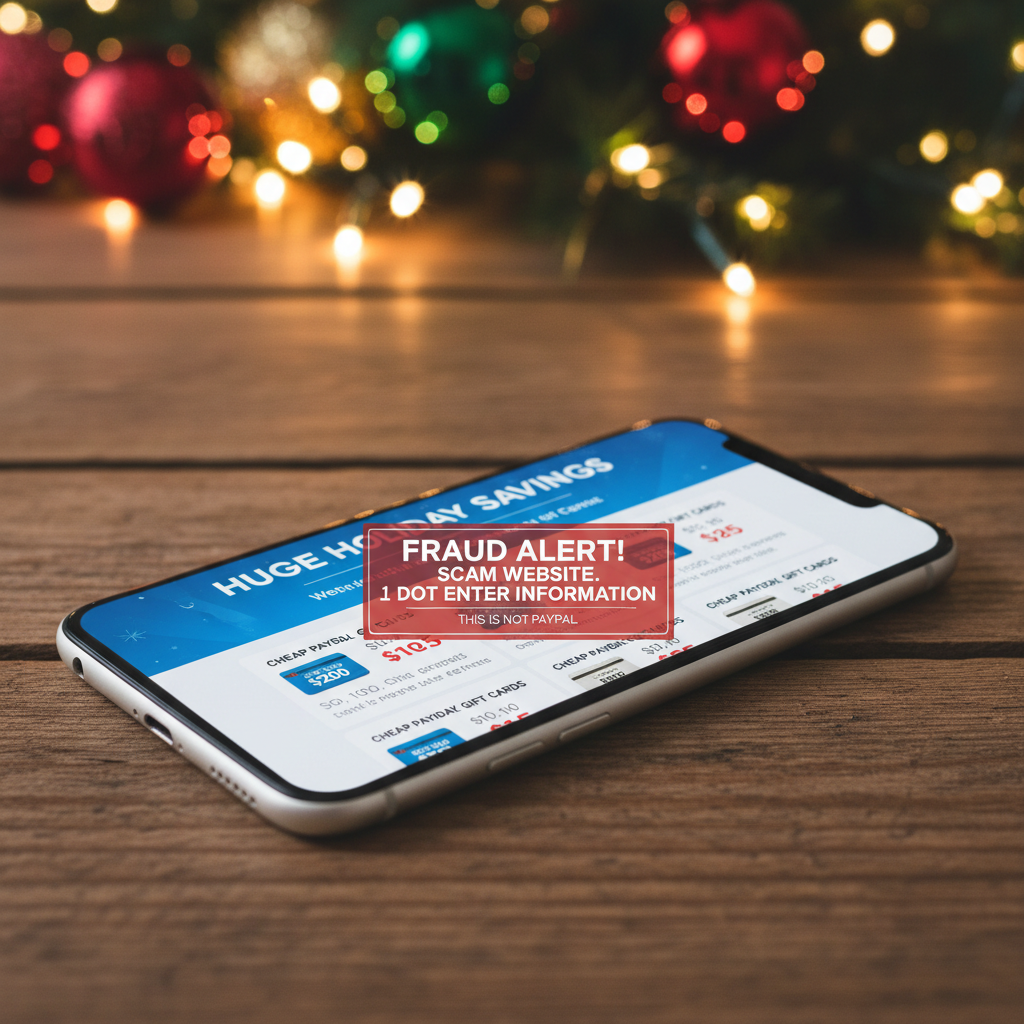
The holidays are here. Everyone is looking for a way to stretch their budget. Scammers know this, and they are ready to exploit it. Cybersecurity watchdogs have issued an urgent warning about a rapidly growing phishing campaign targeting bargain hunters who are searching for discounted PayPal gift cards online.
According to researchers at cybersecurity firm Guardio Labs, the scam relies on highly convincing, fake third-party reseller websites. These sites look incredibly professional. They promise deep discounts of 15% to 30% on digital gift cards. But it is all a trap. Unwary buyers end up with empty pockets and stolen financial details.
The Hook: Too Good to Be True
The setup is simple but devastatingly effective. Bad actors build sleek e-commerce storefronts. They optimize these pages using aggressive SEO tricks and paid search ads so they show up at the very top of search engine results. When a shopper searches for terms like “cheap PayPal gift cards” or “PayPal gift card discount,” the fake site pops right up. It looks secure. It might even feature fake customer reviews to build trust.
“The urgency of holiday shopping makes people let their guard down,” says Marcus Vance, a threat analyst who monitored the campaign. “When a site promises a $100 PayPal gift card for $80, it triggers an emotional response. Shoppers rush to check out before the deal expires.”

How the Reseller Trap Works
Once you add the card to your cart, the checkout process begins. That is where the real damage happens. The site prompts you to enter your full name, home address, credit card details, and sometimes even your actual PayPal login credentials.
In some versions of this scam, the checkout system rejects standard credit cards, claiming a “payment processing error.” It then instructs the victim to pay using cryptocurrency or a peer-to-peer app like Venmo or Cash App. Once the money is sent, the transaction is irreversible. The buyer never receives the digital gift card, and the scammers disappear with both the funds and the personal data.
Security firms report a massive spike in these malicious domains. Since early October, newly registered websites containing words like “PayPal,” “giftcard,” and “discount” have surged by over 45 percent. Cybercriminals are actively scaling up their infrastructure specifically for the winter shopping rush.
Red Flags and How to Stay Safe
PayPal gift cards are highly sought after because they are essentially as good as cash. You can use them almost anywhere online. This high liquidity makes them a prime target for fraudsters. How do you protect yourself?
- Remember the golden rule: if a deal seems too good to be true, it is.
- Stick to official sources. PayPal does not typically offer its digital gift cards at a discount through random third-party websites.
- Only purchase gift cards directly from PayPal’s official platform or trusted, major retailers like Amazon, Walmart, or Target.
- Always check the URL in your browser bar. Watch out for typos, extra letters, or weird domain extensions like “.xyz” or “.top” instead of “.com.”
- Never pay for digital goods with non-refundable methods like cryptocurrency or wire transfers if a seller insists on it.
If a reseller site asks for your PayPal password to “verify” the purchase, close the tab immediately. Real merchants will never ask for your private passwords. Stay vigilant, or your holiday cheer might turn into a major financial headache.