
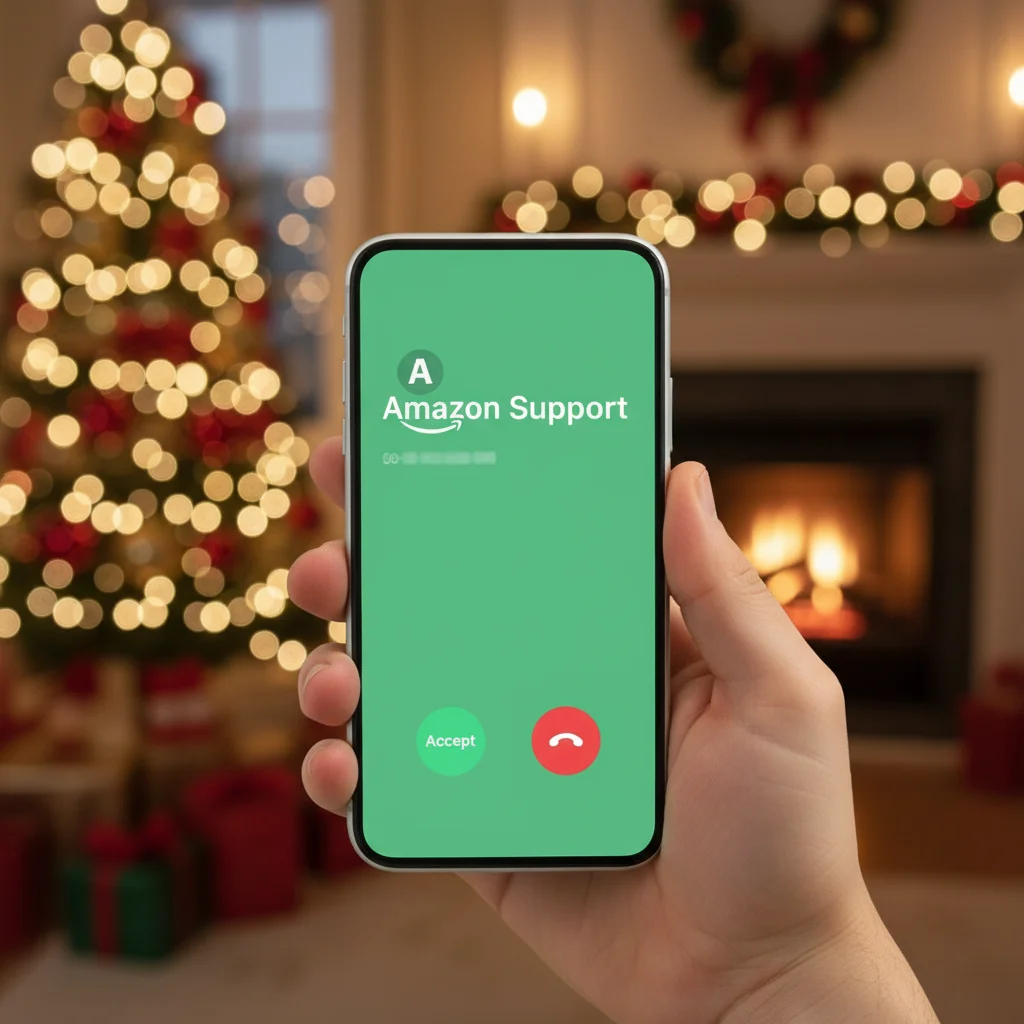
The holiday shopping rush is officially here, and with it comes a dangerous new threat to your wallet. Cybersecurity researchers are warning of a highly sophisticated scam targeting Amazon customers. This time, criminals are using ultra-realistic AI deepfake voice calls to drain gift card balances before shoppers even have a chance to spend them.
Claim Free Amazon Gift Card here
It starts with a simple notification. You might get a text message or an email warning that your Amazon account has been locked due to “suspicious activity.” Some messages claim a high-value purchase, like a new MacBook or PlayStation 5, has been charged to your account. Panicked, you dial the customer support number listed in the message. Or, in some cases, your phone rings directly, displaying “Amazon Support” on the caller ID.
That is where the trap is sprung.
The Rise of the AI Cloned Voice
When you answer or make the call, you do not hear a robotic computer voice or a poorly scripted operator. Instead, you hear a friendly, professional, and entirely natural voice. It sounds exactly like a seasoned customer service agent working in a quiet call center. You might even hear the soft clatter of keyboards or ambient office murmur in the background.
“The realism is terrifying,” says Marcus Vance, chief threat analyst at Sentinel Security. “These scammers are using advanced, real-time voice cloning technology. They have trained their AI models on thousands of hours of actual customer service recordings. The AI pauses to breathe, uses natural conversational fillers like ‘um’ and ‘sure,’ and adapts its tone depending on how worried the victim sounds.”
Vance’s team has tracked a massive spike in these incidents since early November. According to Sentinel’s latest threat report, losses from this specific scam have already topped $14 million. The average victim loses between $200 and $1,500 in a matter of minutes.

The Tech Behind the Fraud
The software used by these syndicates is highly sophisticated. It allows a scammer typing on a keyboard in another country to have their words translated instantly into a cloned, English-speaking voice of any gender or accent. This low-latency translation makes real-time, fluid conversations possible. The scammer hears your replies, types a response, and the AI speaks it back to you in a perfectly calm, reassuring voice. This eliminates the telltale language barriers that used to protect consumers from overseas phishing operations.
Why Gift Cards Are the Target
Once the deepfake operator has you on the line, they claim they can fix the account issue or cancel the fake order. But there is a catch. To verify your identity and secure your funds, they ask you to read off the claim codes of any Amazon gift cards associated with your profile, or purchase new ones to “verify” your payment method.
Because the voice sounds so authentic, many people comply without a second thought. Once the scammer has the code, the balance is drained instantly. The funds are often converted into hard-to-trace digital goods or cryptocurrency within seconds, making recovery virtually impossible.
“Historically, voice scams were easy to spot,” says Sarah Jenkins, a consumer advocacy director. “They were plagued by bad grammar, heavy static, or unnatural pauses. Now, generative AI has erased those red flags. A lot of elderly shoppers and busy parents are falling victim simply because the technology is too good to doubt.”
How to Protect Your Wallet This Season
Amazon has stated repeatedly that its customer service teams will never ask customers to purchase gift cards or provide gift card security codes to resolve an account issue. If a support agent asks for this information, it is always a scam.
Security professionals recommend several immediate steps to keep your account safe:
- Never trust caller ID. Spoofing technology makes it incredibly easy for bad actors to display any name or phone number they want on your screen.
- Hang up and log in. If you get an alert about your account, close the call. Open the official Amazon app or type Amazon.com directly into your browser to check your message center.
- Use two-factor authentication (2FA). Enabling this on your account adds a vital layer of protection that scammers cannot easily bypass.
- Keep gift card codes private. Treat your gift cards like cash. Never share the claim code on the back with anyone over the phone or via email.
The holidays should be a time of celebration, not financial stress. Staying skeptical of unexpected calls and verifying all alerts directly through official channels is the best way to ensure your holiday budget goes toward your family, not cybercriminals.