
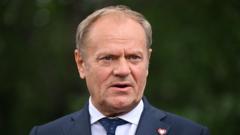
Polish police have detained a suspect accused of planning an assassination attempt against Prime Minister Donald Tusk and Defence Minister Wladyslaw Kosiniak-Kamysz. The arrest follows what officials described as a highly credible and immediate threat to the lives of the country’s top political figures.
Security services sprang into action over the weekend. A special emergency meeting was convened on Sunday to address the threat, which security personnel characterized as deadly serious. The rapid escalation from a threat assessment to an active arrest highlights the urgency that gripped Polish intelligence agencies as the details of the plot emerged.
An Intercepted Threat and a Target in Lower Silesia
The breakthrough in the case came from a digital lead. The State Protection Service, the government branch tasked with the personal security of VIPs and cabinet ministers, intercepted an email containing concrete details about a potential attack. Recognizing the gravity of the communication, they immediately forwarded the data to national police investigators.
Karolina Galecka, a spokesperson for Poland’s Interior Ministry, confirmed that this intercepted email was the key piece of evidence that triggered the police operation. It did not take long for investigators to track the digital footprint to the southwestern region of Lower Silesia.

Police launched a targeted raid in the region and successfully detained the suspect. Jacek Dobrzynski, the spokesperson for the Special Services Co-ordinator, told local media outlets that the suspect is a Polish citizen. Dobrzynski made it clear that this was not a case of hollow internet bravado. “In this case we are talking about a strong likelihood that these threats could actually be carried out,” he stated.
High Stakes for Tusk and His Cabinet
The news has sent shockwaves through Poland’s political establishment. Prime Minister Donald Tusk took to social media to thank the law enforcement officers involved in the operation, praising their “swift and decisive action” in preventing what could have been a catastrophic event.
Tusk is a veteran statesman who is no stranger to high-stakes political conflict. He served as Poland’s prime minister from 2007 to 2014 before taking on a prominent international role as the President of the European Council from 2014 to 2019. He returned to lead the Polish government in late 2023, heading a coalition that has faced intense scrutiny and political division. The targeting of both Tusk and his defence minister, Kosiniak-Kamysz, suggests a deliberate attempt to strike at the core of the country’s leadership and national security apparatus.
Investigations Shift to Motive
With the suspect now in custody, investigators are turning their attention to the motive behind the planned attack. Polish authorities are working to determine if the detained man acted entirely alone or if he had operational support from other domestic actors or external entities. Security around both Tusk and Kosiniak-Kamysz has been noticeably bolstered in the wake of the incident, with the State Protection Service reviewing all current security protocols for senior officials.
While officials have released few details about the suspect’s background, the incident highlights a growing concern over the safety of public figures in Central Europe. The investigation remains active as forensic teams analyze the suspect’s electronic devices and communications to map out any further potential threats.