

Turn on the television or open your social feeds this holiday season, and you might think you have traveled back to 1998. The glitzy, flawless commercials of recent years are gone. Instead, screens are filled with shaky home-video footage, hand-written signs, and puppets with very visible seams.
Major retail brands are making a sharp, deliberate turn toward the unpolished. They are calling it “hokey” on purpose.
This is not a sudden budget cut. It is a calculated survival strategy for late 2026. After several seasons of hyper-realistic, AI-generated marketing campaigns, shoppers have reached a breaking point. Consumer fatigue with digital perfection has turned into outright distrust.
The Backlash Against Flawless Feeds
People are tired of looking at computer-generated images of perfect families sitting around glistening, sterile turkeys. A recent study by consumer research firm Foresight Group revealed that 76% of US shoppers now feel actively alienated by overly perfect digital imagery. Many associate hyper-smooth graphics with corporate laziness or deception.
“We reached peak perfection last year, and consumers revolted,” says Elena Rostova, a retail analyst at BrandSync. “When everything is flawlessly rendered by a machine, nothing feels trustworthy. Flaws are the only way to prove you are real now.”
Brands are learning that in an era of endless synthetic content, human error is a premium feature.
Shaky Cameras and Crayon Sketches
The shift is visible across the retail industry. Take Target’s flagship winter campaign. Instead of a sparkling kitchen filled with immaculate actors, their main holiday commercial features a chaotic family trying to extract a smoky, lopsided pie from a dated oven. The camera shakes. The lighting is harsh. The dad laughs and reaches for a paper plate. It looks like a video your uncle shot on a vintage phone. Target spent millions to make it look like it cost fifty dollars.
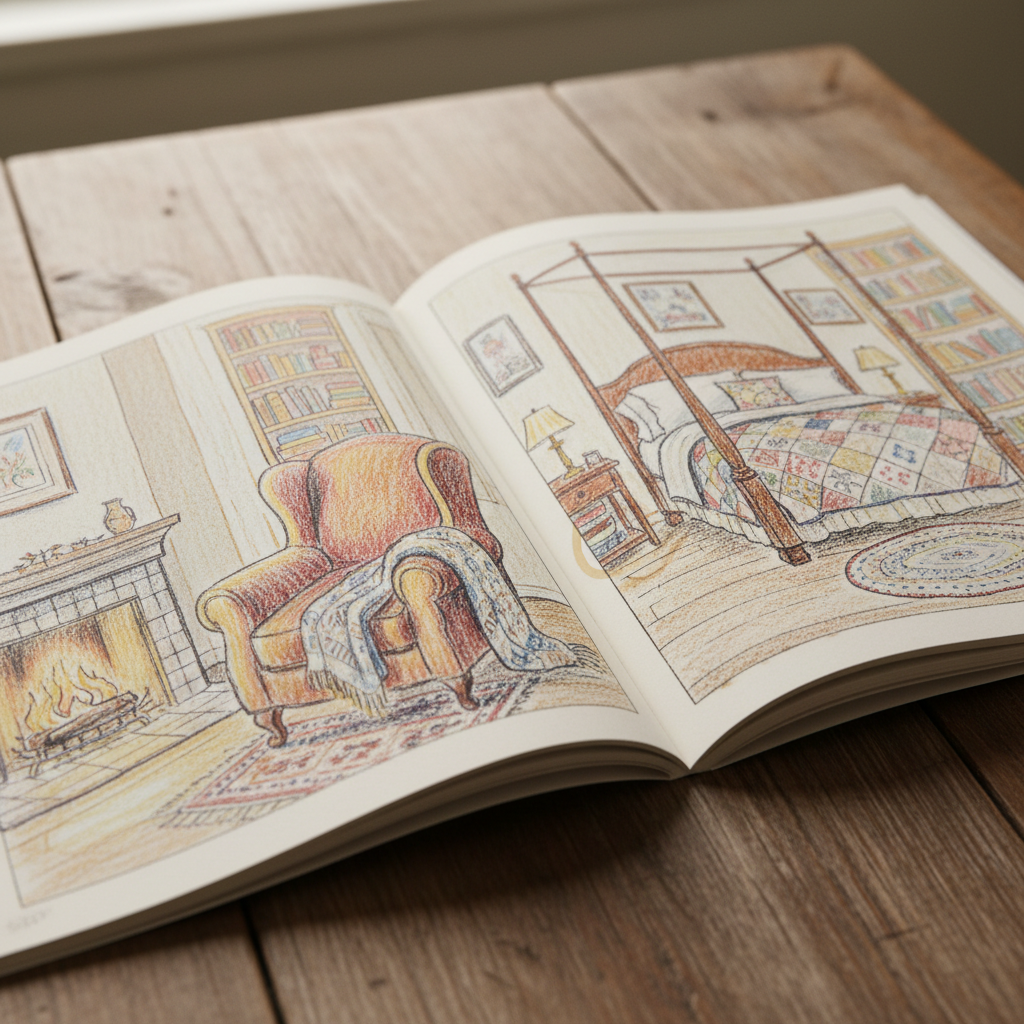
IKEA is taking a similar approach. In their European holiday mailers, the sleek 3D renders of cozy living rooms are gone. In their place are hand-sketched floor plans drawn with crayons, complete with coffee stains on the edges of the pages. The message is subtle but clear: real people live here, and real people made this.

The Rise of Authentic Friction
The pivot comes after a year of intense backlash against generative AI in media. Throughout 2025, several high-profile brands faced public boycotts after using AI-generated imagery that felt uncanny or deceptive. Shifting to low-fidelity marketing is a defensive play.
Industry experts call this new design principle “authentic friction.” It means intentionally leaving mistakes in the final product to prove human hands were involved.
- Visible imperfections: Uncut threads on clothing displays and raw edges on signs.
- Low-fi audio: Voiceovers that sound like they were recorded in a living room, complete with background noise.
- Analog media: A return to claymation, stop-motion, and physical model-making instead of CGI.
The New Luxury of Human Error
Even luxury labels are getting messy. British fashion house Burberry launched its winter line with a series of stop-motion claymation shorts that look deliberately clumsy. Look closely, and you can see the animator’s thumbprints on the clay. It is a far cry from the sleek, high-definition digital rendering of their past campaigns.
“For a while, AI allowed brands to create massive, cinematic worlds for pennies,” says Marcus Vance, creative director at agency group Red & Co. “But when every local car dealership can generate a Hollywood-level sci-fi ad with a simple text prompt, the luxury is gone. The new luxury is human imperfection. A crooked stitch, a crackly voiceover, a typo—these are things that feel honest.”
Will this messy trend survive past the holidays? Probably. Industry insiders suggest that consumers are no longer buying the dream of a perfect life because they know a server farm generated it. They want the messy, chaotic reality of being human. For now, the best way to sell a holiday sweater is to show it looking a little bit lumpy.