
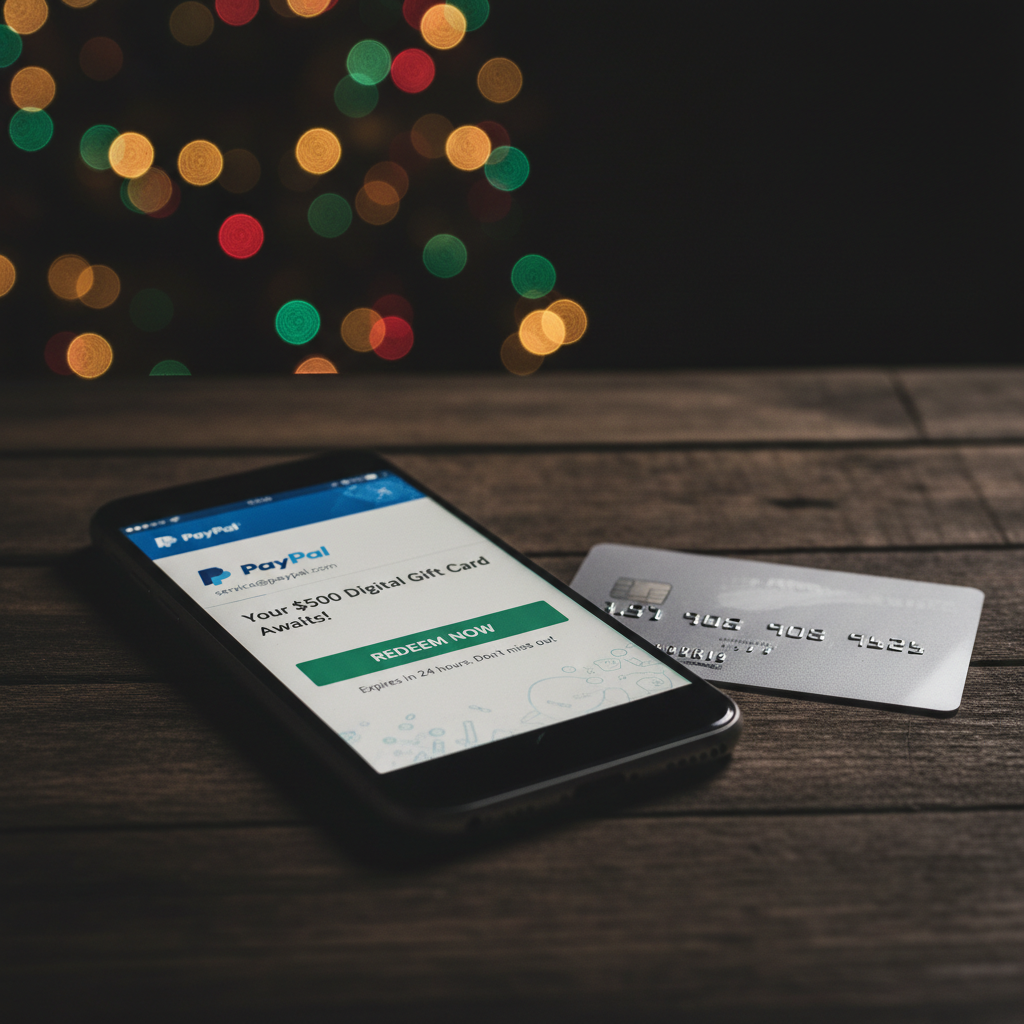
A Sneaky Holiday Trap
The holiday shopping rush is just around the corner. Unfortunately, online thieves are already wrapping up their latest traps. Cybersecurity teams are sounding the alarm over a highly sophisticated phishing campaign targeting shoppers ahead of the 2026 holiday season. This time, the bad actors have found a clever way to exploit PayPal’s legitimate digital gift card delivery system.
It is a devious strategy. By piggybacking on a trusted global financial platform, scammers are slipping past security tools that usually catch fake emails. If you are planning to send a digital gift card to a loved one this year, you need to watch your inbox closely.
How the PayPal Gift Card Loophole Works
Traditional phishing campaigns rely on lookalike domains or poorly designed email templates. Security filters catch those easily. This new attack is different. It uses PayPal’s actual infrastructure to do the dirty work.
Researchers at security firm Aegis Cyber Security first spotted the campaign earlier this month. According to their report, scammers are abusing a loophole in PayPal’s peer-to-peer gift card notification system. The attackers initiate a digital gift card purchase using stolen or temporary accounts. They then target the victim by inputting their email address as the recipient.
Here is where the trick turns nasty. The scammers embed malicious links or fraudulent customer service numbers directly into the custom message field of the gift card template. Because the email notification is generated by PayPal’s own servers, it carries valid cryptographic signatures. It sails past Google, Microsoft, and corporate spam filters without raising a single red flag.
The Psychological Trap
Imagine checking your email and finding a notification from PayPal. It says someone sent you a $100 digital gift card. Naturally, you are curious. You click to claim it. Or perhaps the email says you just purchased a high-value gift card you never ordered. Panic sets in. You want to cancel the transaction immediately.

This panic is exactly what the hackers rely on. “They play on your emotions,” says Marcus Vance, lead threat analyst at Aegis. “Whether it is the excitement of a free gift or the fear of a compromised account, they want you to act fast without thinking.”
Once you click the link embedded in the message, you are taken to a cloned PayPal login portal. It looks identical to the real thing. It even has a working SSL certificate. If you type in your credentials, the attackers steal your password and bypass your two-factor authentication using real-time interception scripts. Within minutes, your account is drained.
Why 2026 is a Prime Target
The timing of this campaign is not an accident. Retail analysts predict that digital gift card sales will hit record highs during the 2026 winter shopping season. Consumers appreciate the convenience, but so do criminals. With millions of transactions happening every day, a suspicious notification is much easier to overlook.
Worse, the scammers are using automated bots to scale up their operations. They can send out tens of thousands of these malicious gift card notifications in a single afternoon. If even a fraction of a percent of targets fall for the trick, the payday is massive.
How to Stay Safe This Shopping Season
Detecting this scam is incredibly tough because the email itself is authentic. However, you can keep your money safe by following a few simple rules:
- Never use embedded links or numbers: If you receive an unexpected gift card or transaction alert, do not click any links inside the email. Do not call the numbers listed in the message.
- Go straight to the source: Open a new browser tab, type in the official PayPal web address, and log in securely. Check your dashboard to see if the transaction is actually there.
- Look at the custom message: If a notification contains urgent language, weird spelling, or external links in the personal memo section, close it. PayPal never asks you to verify your identity through a link inside a gift card message.
- Enable robust security: Use an authenticator app for two-factor authentication rather than SMS text codes, which scammers can easily intercept.
PayPal has been notified of the exploit and is reportedly working on a fix to restrict external links in gift card custom fields. But until that patch goes live, the burden of safety rests on the shopper. Stay vigilant, verify every notification, and protect your digital wallet this winter.