
The waters of the Strait of Hormuz are growing increasingly dangerous. As mediated talks to halt the war between Iran, Israel, and the United States hit a dead end, military actions along this vital maritime corridor have sharply escalated.
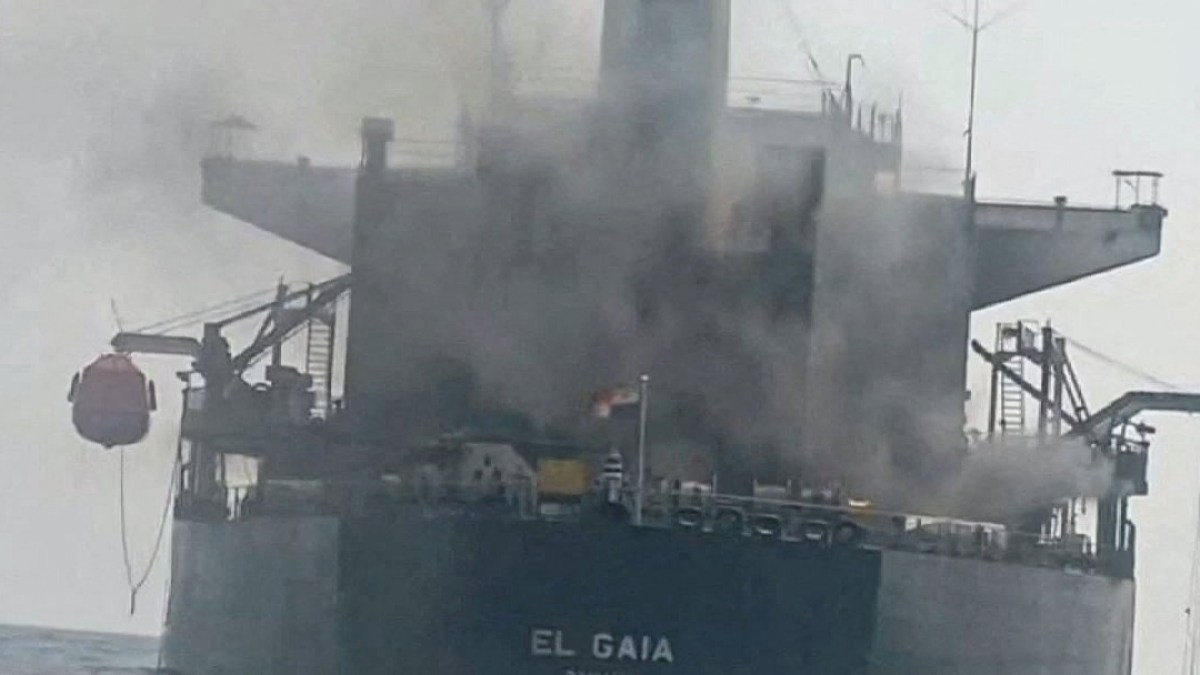
Over the weekend, a series of naval incidents highlighted the rising stakes. On Saturday night, Iran’s Islamic Revolutionary Guard Corps (IRGC) Navy reported that an unnamed supertanker caught fire after hitting a mine. According to the IRGC, the vessel was traveling an unauthorized route with its transponders turned off. The Iranian military quickly issued a stern warning: any ship ignoring the strait's rules and security protocols will face a similar fate.
By Sunday, the tension had only intensified. The United Kingdom Maritime Trade Operations reported that a projectile struck an outbound tanker in the strait on Sunday afternoon. Just hours earlier, nearby ships off the coast of the United Arab Emirates were ordered to clear their anchorages. Meanwhile, the UAE coastguard had to rescue 22 crew members from a separate, burning tanker off its shores, though the cause of that fire remains unclear.
US Blockade and Military Action
On the other side of the conflict, the US military is actively enforcing its blockade. US Central Command (CENTCOM) released video footage showing a fighter jet striking the stern of a Panama-flagged cargo vessel in the Gulf of Oman. The strike disabled the ship's propulsion. CENTCOM stated the vessel was attempting to bypass the naval blockade of southern Iranian ports, which Washington reimposed in mid-July.
Since then, the US says its forces have disabled four merchant vessels, turned around 135 ships, and destroyed 10 tankers linked to Iran. American officials maintain that no Iranian oil is getting past their blockade line.
The conflict, which erupted on February 28 when US and Israeli forces first launched strikes on Iran, is now entering its eighth month. There are no signs of a ceasefire. “We have struck blows against enemy vessels,” Habibollah Sayyari, the Iranian army's joint coordinator, told state television. “If anything else happens against Iran, we will strike them again.”
Impact on Global Energy Flows
This maritime warfare is taking a massive toll on global energy markets. During the week ending October 5, at least a dozen ships were attacked—the highest weekly toll since the war began. The geographic scope of these attacks is expanding, too. One vessel was targeted near Qatar's northern coast, showing that the danger is no longer confined to the narrow bottleneck of Hormuz.
Unsurprisingly, oil shipments are plummeting. Data from analytical firm Kpler shows that crude flows through the strait dropped to an average of 8.5 million barrels per day for the week ending October 7. That is roughly 40 percent below typical peacetime levels, erasing the brief recovery seen earlier this month.
Diplomatic Stagnation
Diplomacy remains frozen. Part of the delay stems from domestic politics, with Israel heading to elections on October 27 and the US facing pivotal midterm elections on November 3. No one expects a breakthrough before those dates.
Tehran wants a return to a June memorandum of understanding and wants Washington to endorse an agreement mediated by Oman to establish temporary, coordinated shipping lanes. There has been some slight movement on the American side, however. US Vice President JD Vance recently suggested that Washington might drop its demand for zero uranium enrichment on Iranian soil, asking instead for a “meaningful” reduction in capacity to bring an end to the war.
But Iran is not backing down easily. On Sunday, Iran's nuclear chief, Mohammad Eslami, defended the country's domestic nuclear program, emphasizing its role in power generation and criticizing the International Atomic Energy Agency for failing to condemn US threats against Iranian facilities.
The message from Tehran remains defiant. Behrouz Kamalvandi, spokesman for the Atomic Energy Organization of Iran, put it bluntly: “If those interests can be secured through diplomacy, that is much better, but if not, we will secure them in the field of battle.”