
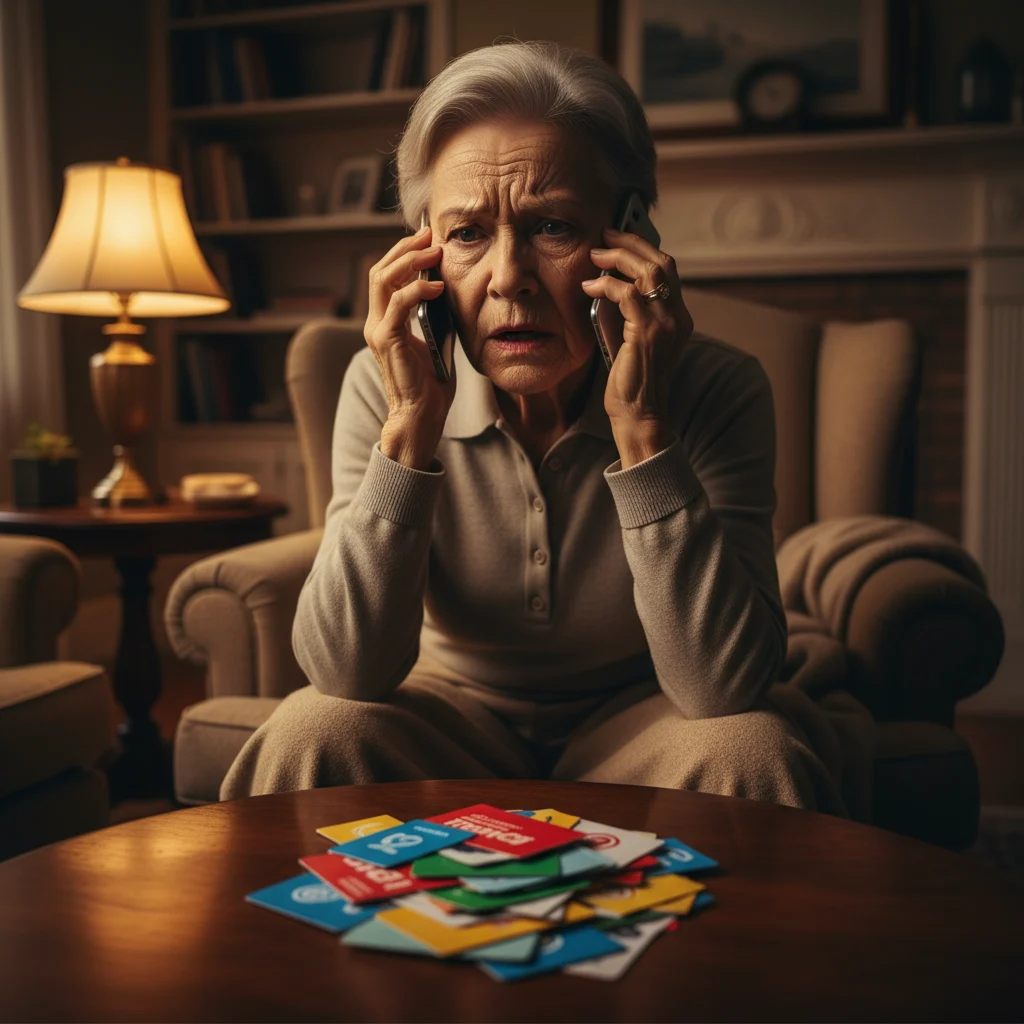
The voice on the phone sounds exactly like your grandson. He is panicked, weeping, and says he has been arrested after a car accident. He needs bail money immediately. But there is a catch: the assistant at the courthouse says they are experiencing a system outage and can only accept Amazon gift cards to expedite his release.
Claim Free Amazon Gift Card here
It sounds bizarre when written down. Yet, thousands of older Americans are falling victim to this exact scenario. Ahead of the busy 2026 holiday season, the Federal Trade Commission (FTC) has issued a fresh warning about a sharp rise in sophisticated, AI-powered phone scams designed to trick elderly consumers into buying gift cards.
The Tech Behind the Trap
These are not the robotic, easily detectable robocalls of a decade ago. Today’s scammers use advanced generative artificial intelligence to pull off highly personalized schemes. With just a three-second audio clip scraped from a public social media video, bad actors can clone a person’s voice with terrifying precision. They replicate pitch, accent, and even breathing patterns.
The emotional distress of hearing a loved one in danger bypasses a victim’s natural skepticism. Once the scammer establishes this emotional chokehold, they introduce a secondary character—often pretending to be a lawyer, police officer, or an Amazon security representative—to direct the payment process.
Why Amazon Gift Cards?
Gift cards remain the preferred currency for modern fraudsters. They are easy to buy at almost any grocery store, pharmacy, or gas station. They offer nearly instant access to funds, and once the numbers on the back of the card are shared, the money is gone forever.
“Scammers love gift cards because they are like cash but easier to steal from a distance,” said Samuel Levine, Director of the FTC’s Bureau of Consumer Protection. “By the time the victim realizes they have been conned, the funds have already been drained and converted into untraceable goods or cryptocurrency overseas.”
According to recent FTC data, reported losses involving gift cards have surged. In the first three quarters of 2026 alone, consumers lost over $160 million to gift card scams, with older adults bearing the brunt of the financial damage. The average loss per victim has also crept upward, often totaling thousands of dollars per incident as scammers push victims to visit multiple retail locations.
Tactics Shift Toward the Holidays
With the 2026 holidays right around the corner, officials expect these calls to multiply. Holiday shopping naturally increases the volume of delivery notifications, online orders, and chaotic family travel, creating the perfect cover for scammers.
In one variation of the scam, callers pose as Amazon fraud department representatives. They claim the victim’s account has been compromised to purchase expensive electronics. To “secure” their funds or assist in a sting operation to catch the rogue employees, the victim is instructed to purchase high-value Amazon gift cards and read the security codes over the phone.
How to Protect Yourself and Loved Ones
The FTC emphasizes that no legitimate company, government agency, or court will ever demand payment via gift cards. If someone asks you to buy gift cards to solve a problem, it is always a scam.
If you receive a suspicious call from a loved one asking for money, hang up immediately. Do not trust the caller ID, as phone numbers are easily spoofed. Instead, call that family member directly using a phone number you know is correct. You can also reach out to another family member to verify the story.
The FTC recommends creating a family “password” or safe word. If a relative calls in a genuine emergency, they should be able to provide this word. If the person on the other end cannot, you know instantly that the voice is an AI clone.
If you or someone you know has been targeted, report the incident immediately at ReportFraud.ftc.gov. Sharing these stories helps federal investigators track down the networks behind these operations and warn others before it is too late.