

For years, England’s women’s cricket team has looked at its spin department as an insurance policy. In Sophie Ecclestone, Sarah Glenn, and Charlie Dean, they possessed a trio capable of choking any batting lineup in the world. But during the recently concluded 2026 Women’s T20 World Cup on home soil, that security blanket turned into a tactical straitjacket. Now, with a grueling winter schedule looming, England’s management faces a quiet revolution.
The tournament was supposed to be England’s coronation. Instead, their campaign ended abruptly in the semi-finals, exposed by a ruthless Indian batting lineup that refused to let the spinners settle. England had consistently fielded three, sometimes four, slow bowlers. On tired, late-summer pitches, the strategy seemed logical. Yet, when the pressure mounted, the lack of variety became glaring. The slow-slow approach lacked a plan B. Without a genuine fast-bowling threat to shake up the middle overs, England looked toothless.
The Over-Reliance on the Slow Trio
It is hard to criticize a strategy built around world-class performers. Ecclestone remains a generational talent, and Glenn’s leg-spin is arguably the most improved weapon in the white-ball game. Alongside Dean, they formed a triumvirate that head coach Jon Lewis leaned on heavily. During the group stages, the plan worked. Opponents struggled to sweep or skip down the track on gripping pitches at Bristol and Derby.

But the knockout stage at Lord’s told a different story. India’s batters used their feet beautifully, forcing England’s spinners to alter their lengths. Without the cushion of scoreboard pressure, the spinners had to defend. That is when the absence of a raw, point-of-difference seamer hurt most. Lauren Filer, England’s fastest bowler, watched much of the tournament from the bench. Freya Kemp was used sparingly as a bowling option, still finding her rhythm after long-term back issues. The balance was off.
Winter Demands a Hard Reset
The upcoming winter tours offer no hiding place. England will travel to Australia for a multi-format Ashes series, followed by a demanding trip to New Zealand. These are venues where slow, turning tracks are rare. On the hard, bouncy pitches of Adelaide and Melbourne, a spin-heavy attack is simply fodder for world-class cutters and pullers. The need for raw pace is no longer a luxury. It is an emergency.
“We have to adapt,” coach Jon Lewis admitted after the semi-final exit. “Our spin group has carried us for a long time, but we cannot rely on one dimension. Winning in Australia requires bounce, pace, and lateral movement. We need to build a seam attack that can take wickets when the ball isn’t turning.”
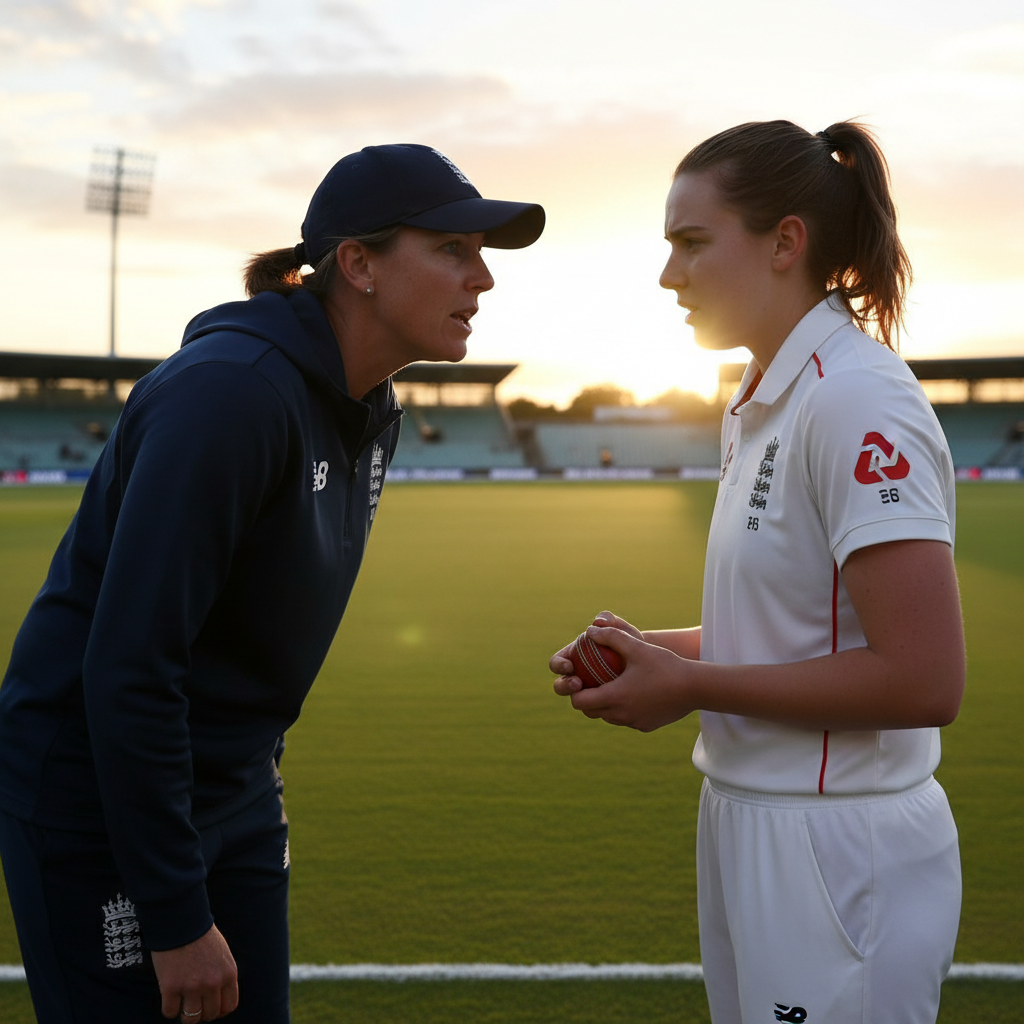
The Seam Prospects Stepping Up
Rebuilding a pace attack is easier said than done. Fast bowlers cannot be manufactured overnight. However, the raw materials are there. Filer represents the future. Her ability to bowl in excess of 75 mph makes her a unique asset in the women’s game. The coaching staff must now give her the overs and the confidence to lead the line, accepting that pace often comes with a tax on economy.
Then there is Mahika Gaur. The tall left-arm seamer has spent months working her way back to full fitness. Her height offers a trajectory that no other bowler in the setup can replicate. If Gaur can regain her rhythm, she provides the perfect foil to the right-arm seamers. Meanwhile, the selectors will monitor domestic standouts from the Charlotte Edwards Cup, looking for steady medium-pacers who can hold a line under pressure.
- Lauren Filer: Set to take a leading role as England’s primary strike bowler.
- Mahika Gaur: The left-arm option key to creating uncomfortable angles.
- Freya Kemp: Her development into a genuine all-rounder remains vital for team balance.
A Change in Selection Philosophy
The shift will require tough decisions. Playing extra seamers means leaving out one of England’s trusted spinners. It is a gamble. Dropping someone like Glenn or Dean feels counterintuitive given their stellar records. Yet, tournament cricket has proven that versatility trumps reputation. England’s stubbornness in sticking to their spin blueprint ultimately cost them a shot at global glory. They cannot afford to make the same mistake in the Ashes.
This winter is not just about survival. It is about evolution. If England want to close the gap on Australia, they must embrace the burn of this transitional phase. The era of hiding behind spin is over.